Vision & Nutrition for Children
Your Child's Vision Depends on What They Eat.
Are They Getting Enough?
If your child is a picky eater, struggles with learning, or has frequent eye infections, the problem might not be their eyes
— it might be their diet.
The Hidden Vision Connection Parents Miss
You make sure your child eats healthy. You pack nutritious lunches. You limit sugar. You’re doing everything right.
But here’s what most parents don’t know: even if your child passes a school vision screening with “perfect” 20/20 vision, nutritional deficiencies could be silently affecting their ability to see clearly, learn effectively, and develop properly.
“Having some mom guilt over my child’s vision issues… I wish I had known about this sooner.” — Parent from BVI Voice of Customer Research
You’re not alone. And it’s not too late.
The Hidden Truth:
Your child’s brain and eyes are growing faster in the first years of life than at any other time. During this critical window, they need specific nutrients to build the structures that allow them to see, learn, and remember.
Without these nutrients, vision development can be delayed—even if their eyes look perfectly healthy.
The Three Nutrients Your Child's Brain and Eyes Need Most
“Three nutrients are especially important to support the developing brain and eyes: Lutein, Vitamin E, and DHA.” — Beth Reverri, PhD, RD, Abbott Nutrition Scientist
Lutein: The “Sunscreen” for Your Child’s Eyes
What it is:
The main carotenoid found in babies’ brains, concentrated in four areas related to memory, learning, and development [1]
What it does:
- Protects the macula for clear detail vision
- Relays visual information to the brain
- Shields against blue light and oxidative damage
Where to find it:
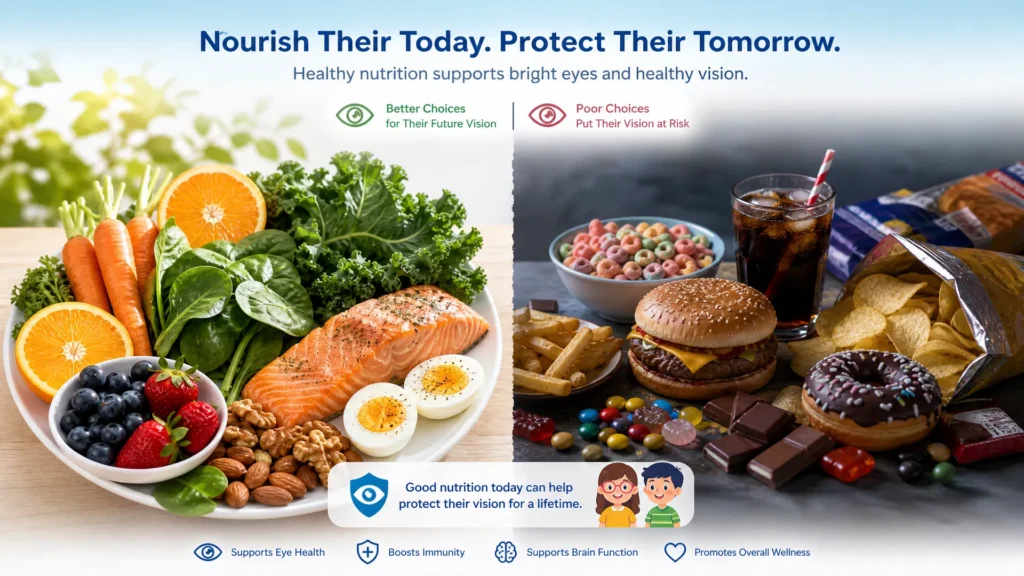
- Spinach, kale
- Broccoli, zucchini
- Asparagus
- Egg yolks
- Corn
- Red apples
Without it:
- Difficulty reading
- Reduced detail vision
- Increased macular degeneration risk
Parent-friendly explanation:
Think of lutein as sunscreen for your child’s eyes. It protects the delicate cells that allow them to see clearly and read comfortably. Without enough lutein, those cells can become damaged over time.
Vitamin E: The Bodyguard for Your Child’s Brain
What it is:
The main antioxidant found in babies’ brains; protects developing cells from damage [1]
What it does:
- Protects DHA from breaking down
- Supports proper night vision
- Prevents oxidative damage to brain and eye tissue
Where to find it:
- Nuts
- Healthy oils
- Avocado
- Spinach
- Broccoli
Without it:
- Decreased night vision
- Retinal degeneration of the retina
- Impaired brain development
Parent-friendly explanation:
Vitamin E is like a bodyguard for DHA—it protects it from breaking down so it can keep building your child’s brain and supporting their vision.
DHA (Omega-3): The Building Block of Your Child’s Brain
What it is:
An omega-3 fatty acid that concentrates in the brain and is essential for visual development [1]
What it does:
- Builds brain cell structure
- Supports normal brain function
- Critical for retinal development
- Reduces inflammation
Where to find it:
- Salmon
- Trout
- Sardines
- Fortified eggs
- Algae supplements
Without it:
- Delayed visual development
- Poor reading ability
- Dry eye symptoms
Parent-friendly explanation:
DHA is the building block your child’s brain uses to create the connections that allow them to learn, remember, and see clearly. Without enough DHA, their brain and eyes can’t develop properly.
How These Three Nutrients Work Together:
Think of it like building a house:
- DHA is the foundation and framework (structure)
- Lutein is the wiring and windows (visual information relay)
- Vitamin E is the protective coating that keeps everything from breaking down
Without all three working together, your child’s vision and learning can suffer.
The Other Critical Nutrients Your Child Needs
Vitamin A: The Night Vision Vitamin
What it does:
- Essential for night vision and low-light vision
- Supports corneal health
- Prevents dry eye and eye infections
Without it:
- Night blindness (inability to see in low light) [2]
- Corneal xerosis (dry, rough cornea) [2]
- Bitot’s spots (foamy patches on the white of the eye) [2]
- Corneal ulceration and blindness [2]
Where to find it:
- Sweet potatoes, carrots, pumpkin
- Dark leafy greens
- Liver
- Fortified milk and dairy products
- Eggs
Zinc: The Orchestra Conductor
What it does:
- Interacts with vitamin A and taurine in the retina [2]
- Regulates the light-rhodopsin reaction (how eyes turn light into vision) [2]
- Brings vitamin A from the liver to the retina to produce melanin (protective pigment) [3]
Without it:
- Poor night vision [3]
- Cloudy cataracts [3]
- Apoptotic photoreceptor death (retinal cell death) [2]
Where to find it:
- Red meat, poultry
- Oysters and shellfish
- Beans, nuts, seeds
- Whole grains
Vitamin C: The Eye Structure Builder
What it does:
- Lowers the risk of developing cataracts [3]
- Slows the progression of age-related macular degeneration [3]
- Supports collagen production in the eye
- Prevents subconjunctival hemorrhage (bleeding in the eye) [2]
Where to find it:
- Oranges, grapefruit, strawberries
- Papaya, kiwi
- Bell peppers, tomatoes
- Broccoli
Vitamin D: The Tear Film Regulator
What it does:
- Prevents dry eye disease by regulating tear film osmolarity [2]
- Decreases the risk of developing cataracts [2]
- Supports immune function in the eyes
Where to find it:
- Sunlight exposure (15-20 minutes daily)
- Fatty fish (salmon, mackerel)
- Fortified milk and orange juice
- Egg yolks
B Vitamins: The Nerve Protectors
Vitamin B1 (Thiamine):
- Prevents eye muscle paralysis and loss of visual acuity [2]
- Deficiency can cause nystagmus (involuntary eye movements)
Vitamin B12:
- Essential for optic nerve health [2]
- Prevents optic neuropathy
- Prevents dry eye disease
Where to find them:
- Whole grains, fortified cereals
- Meat, poultry, fish
- Eggs, dairy products
- Legumes
Does This Sound Like Your Child?
Common Signs That Vision Problems Are Making Everything Harder
- Picky eater who refuses vegetables
- Difficulty seeing at night or in dim lighting
- Frequent eye infections or styes
- Dry, red, or irritated eyes
- Difficulty reading or tracking words on a page
- Poor focus and attention (misdiagnosed as ADHD)
- Slow learning or memory problems
- Frequent headaches or eye strain
- Sensitivity to bright lights
- Slow adjustment from bright to dark environments
If you checked even one box, your child may have a nutritional deficiency affecting their vision and learning.
The Gut-Brain-Eye Connection
“The gut and brain connection is an extensive network of nerve cells that act as a two-way communication signal between the brain and gut.” — Beth Reverri, PhD, RD
What Most Parents Don’t Know:
Even if your child eats the right foods, if their gut isn’t healthy, they may not be absorbing the nutrients their eyes and brain need.
The gut-brain-eye connection:
- Gut health determines nutrient absorption
- Nutrient absorption determines brain and eye development
- Brain and eye development determines learning and vision
If your child has:
- Frequent stomach aches or digestive issues
- Food sensitivities or allergies
- Celiac disease or gluten intolerance
- Chronic constipation or diarrhea
They may not be absorbing enough nutrients—even if they’re eating well.
The Celiac-Vision Connection:
Celiac disease is one of the leading causes of fat-soluble vitamin malabsorption (vitamins A, D, E, K) [2]. Reported ocular manifestations include:
- Impaired vision from occipital calcifications
- Uveitis (inflammation inside the eye)
- Dry eye disease
- Central retinal vein occlusion
These ocular signs could help establish the diagnosis earlier, allowing your child to receive better care [2].
Why Standard Pediatricians Miss This
Most pediatricians are trained to look for severe nutritional deficiencies—the kind that cause obvious symptoms like rickets or scurvy.
But they’re not trained to look for the subtle deficiencies that affect vision and learning.
The problem:
- School vision screenings only test for 20/20 clarity (not nutritional deficiencies)
- Pediatricians don’t routinely screen for vitamin levels unless there’s an obvious problem
- By the time symptoms appear, your child may have been deficient for months or years
The solution:
A comprehensive neuro-optometric evaluation that assesses:
- All 17+ visual skills (not just 20/20 clarity)
- Nutritional status and dietary habits
- Gut health and absorption issues
- Personalized nutritional recommendations
Your Child's Pathway to Better Vision Through Nutrition
At Brain Vision Institute, we don’t just test your child’s vision—we assess the whole child, including their nutritional status and how it’s affecting their ability to see, learn, and thrive.
Comprehensive Nutritional & Visual Assessment
1
We assess:
- All 17+ visual skills
- Dietary habits and nutritional intake
- Signs of vitamin deficiencies
- Gut health and absorption issues
- Food sensitivities and allergies
- Family history
What we measure:
- Eye tracking and focusing ability
- Visual processing speed
- Night vision and light sensitivity
- Tear film quality (dry eye indicators)
- Corneal health (vitamin A deficiency indicators)
- Macular pigment density (lutein and zeaxanthin levels)
Personalized Nutrition & Vision Plan
2
Based on your child’s unique needs, you’ll receive:
Nutritional Recommendations:
- Specific foods to add to your child’s diet
- Supplement recommendations (if needed)
- Meal planning guidance for picky eaters
- Gut health support strategies
Vision Therapy (if needed):
- Customized exercises to strengthen visual skills
- Integration with nutritional support
- Home activities to reinforce learning
Ongoing Monitoring:
- Regular check-ins to track progress
- Adjustments to nutrition and therapy as needed
- Collaboration with your pediatrician and other specialists
Transform Your Child's Vision & Learning
3
The result: Your child will have:
- Stronger, healthier eyes with better night vision
- Improved ability to focus and track while reading
- Better memory and learning capacity
- Fewer eye infections and dry eye symptoms
- Optimal brain and eye development for lifelong success
Real Stories of Transformation
Emma’s Night Vision
Before:
7-year-old Emma was terrified of the dark. She couldn’t see well at night and refused to sleep without a bright nightlight. Her parents thought it was just a phase.
Discovery:
Comprehensive evaluation revealed severe vitamin A deficiency from a restricted diet (she refused most vegetables).
The intervention:
Nutritional counseling, vitamin A supplementation, and dietary changes (sneaking vegetables into smoothies and sauces).
Result:
Within 3 months, Emma’s night vision improved dramatically. She no longer needed a nightlight and could navigate her house in the dark. Her parents were amazed at how quickly nutrition made a difference.
Liam’s Reading Struggles
Before:
9-year-old Liam struggled with reading despite being “smart.” He lost his place frequently and complained of eye strain, and avoided homework.
Discovery:
Comprehensive evaluation revealed Omega-3 deficiency and poor eye tracking. His diet consisted mostly of processed foods with no fish.
The intervention:
DHA supplementation, dietary changes (adding salmon twice weekly), and vision therapy to strengthen eye tracking.
Result:
Within 6 months, Liam’s reading speed increased by 30 words per minute, and he no longer complained of eye strain. His teacher noticed he was more engaged in class.
Sophia’s Dry Eyes
Before:
5-year-old Sophia constantly rubbed her eyes and complained they felt “scratchy.” Her pediatrician said it was allergies, but allergy medication didn’t help.
Discovery:
Comprehensive evaluation revealed vitamin D deficiency and tear film dysfunction. She spent very little time outdoors and drank no fortified milk.
The intervention:
Vitamin D supplementation, increased outdoor time, and dietary changes (fortified milk and fatty fish).
Result:
Within 2 months, Sophia’s dry eye symptoms resolved completely. She stopped rubbing her eyes and no longer complained of discomfort.
Frequently Asked Questions
Your Questions, Answered
Can't my pediatrician just test for vitamin deficiencies?
Most pediatricians don’t routinely test for vitamin levels unless there’s an obvious problem (like severe anemia or rickets). By the time symptoms are severe enough to prompt testing, your child may have been deficient for months or years.
At BVI, we assess nutritional status as part of every comprehensive evaluation because we understand the critical connection between nutrition and vision.
My child takes a multivitamin. Isn't that enough?
Not necessarily. Many children’s multivitamins contain insufficient amounts of the nutrients critical for vision development (especially lutein, zeaxanthin, and DHA). Additionally, if your child has gut health issues, they may not be absorbing the nutrients from their multivitamin.
We provide personalized recommendations based on your child’s specific needs—not a one-size-fits-all approach.
My child is a picky eater and refuses vegetables. What can I do?
- Sneaking vegetables into foods your child already loves (smoothies, sauces, baked goods)
- Making vegetables more appealing (fun shapes, dips, roasting for sweetness)
- Supplementation when dietary changes aren’t enough
- Addressing sensory issues that may be contributing to picky eating
How long does it take to see results from nutritional changes?
It depends on the severity of the deficiency and your child’s individual response. In general:
- Vitamin A deficiency: Symptoms like night blindness can improve within weeks to months [2]
- Omega-3 supplementation: Visual and cognitive improvements typically seen within 3-6 months
- Lutein and zeaxanthin: Macular pigment density increases gradually over 6-12 months
We monitor progress regularly and adjust recommendations as needed.
Are supplements safe for children?
When properly dosed and supervised by a healthcare professional, supplements are generally safe for children. We only recommend supplements when dietary changes aren’t sufficient, and we work with your pediatrician to ensure safety.
Important: Never give your child supplements without professional guidance, as some vitamins (especially fat-soluble vitamins A, D, E, K) can be toxic in high doses.
My child has celiac disease / food allergies. Can you still help?
Absolutely! In fact, children with celiac disease or malabsorption disorders are at higher risk for nutritional deficiencies affecting vision [2]. We work with your child’s gastroenterologist to ensure they’re getting the nutrients they need through alternative sources or supplementation.
Will my insurance cover nutritional counseling?
Coverage varies by insurance plan. Many plans cover comprehensive vision evaluations, and some cover nutritional counseling when medically necessary. We’ll work with you to maximize your benefits and provide transparent pricing.
What if my child's vision problems aren't caused by nutrition?
Nutrition is just one piece of the puzzle. During our comprehensive evaluation, we assess all potential causes of vision problems, including:
- Binocular vision disorders (convergence insufficiency, eye tracking problems)
- Refractive errors (nearsightedness, farsightedness, astigmatism)
- Neurological issues (concussions, developmental delays)
- Environmental factors (screen time, lighting, posture)
We create a personalized plan that addresses all contributing factors—not just nutrition.
References
-
- Reverri, B. (2020, January 25). Supporting brain and eye development in young children. Abbott Nutrition News. Retrieved from https://www.nutritionnews.abbott/pregnancy-childhood/kids-growth/supporting-brain-and-eye-development-in-young-children/
- Serhan HA, Alma’aitah HW, Irshaidat S, Ameer MA, Asghar MS, Tahir MJ. Ophthalmic manifestations of nutritional deficiencies: A mini review. J Family Med Prim Care. 2022 Oct 31;11(10):5899-5901. doi: 10.4103/jfmpc.jfmpc_790_22. PMID: 36618247; PMCID: PMC9810943.
- American Optometric Association. (n.d.). Diet and nutrition. Retrieved from https://www.aoa.org/healthy-eyes/caring-for-your-eyes/diet-and-nutrition
- American Academy of Ophthalmology. (2017, October 12). Child’s 6-food diet triggers profound vision loss. Retrieved from https://www.aao.org/education/headline/child-s-6-food-diet-triggers-profound-vision-loss
- World Health Organization. (2023, August 9). Vitamin A supplementation in infants and children 6–59 months of age. Retrieved from https://www.who.int/tools/elena/interventions/vitamina-children
- Venkataswamy G, Glover J, Friedman M. Bitot’s spots and night blindness in Madurai, South India. Am J Ophthalmol. 1976;82(5):685-690.
- Brown RL, Haas MJ, Fiedler V, et al. Vitamin D and posterior subcapsular cataracts. Invest Ophthalmol Vis Sci. 2014;55(13):8452-8458.
- Carmody RJ, Cotter TG. Zinc and retinal photoreceptor cell death. Invest Ophthalmol Vis Sci. 2000;41(11):3559-3564.
- Fousekis FS, Mitselos IV, Christodoulou DK. Ocular manifestations in celiac disease: An overview. Int Ophthalmol. 2020;40(4):1049-1054.
- Brain Vision Institute. (n.d.). Voice of Customer Research. Internal document.
Don't Wait and See. Take the First Step Today.
Your child’s vision depends on what they eat. Are they getting enough?
Imagine:
- Your child reading comfortably without eye strain or headaches
- No more battles over homework because their eyes can keep up with their brain
- Watching them thrive in school because they can finally see clearly and focus
- Knowing you’re giving them the nutritional foundation for lifelong eye health
This is possible. And it starts with understanding the connection between nutrition and vision.