

Dry Eye In Children
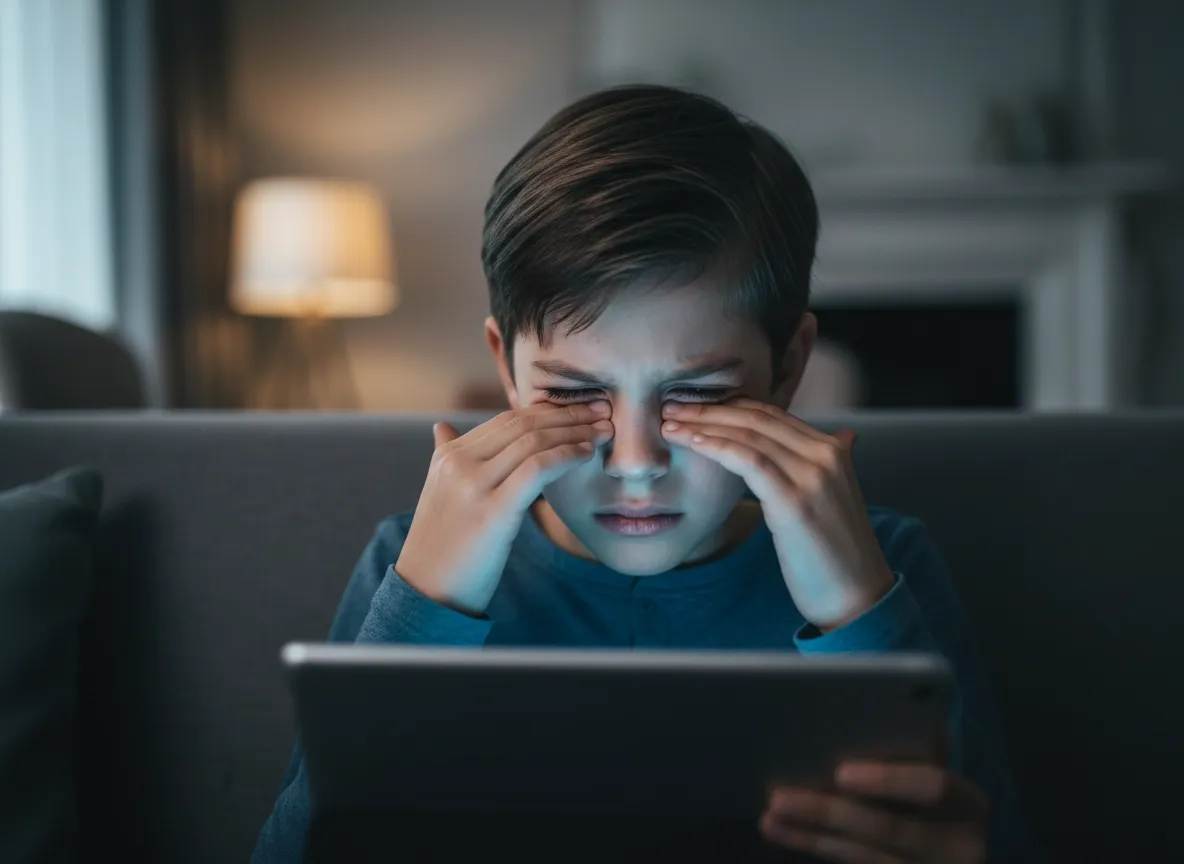
Your Child Complains Their Eyes Are Tired, Burning, or Itchy After Screen Time.
You Think It’s Normal.
It’s Not.
Dry eye disease now affects 1 in 4 children—and after the COVID-19 pandemic, that number has jumped to nearly 1 in 2 due to increased screen time. Your child’s meibomian glands (the tiny oil glands that keep their eyes moist) are still developing, and excessive screen time can cause permanent gland damage that leads to chronic dry eye, vision loss, and corneal damage. The good news? Early intervention can reverse symptoms and protect your child’s eyes for life.
1 in 4 Children Now Has Dry Eye Disease—And It’s Getting Worse
You might think dry eye is an “adult problem.” It’s not.
Recent research shows that 23.7% of children (nearly 1 in 4) now experience dry eye disease—and after the COVID-19 pandemic, that number has skyrocketed to 44.1% (nearly 1 in 2 children) due to increased screen time from remote learning and online entertainment.
Here’s what’s even more alarming:
- Children report MORE dry eye symptoms than clinical tests show → Many symptomatic children are never diagnosed
- 86% of children with severe meibomian gland atrophy (shrunken, damaged oil glands) use screens 4+ hours per day
- 50% use screens 8+ hours per day
- 0% of healthy children exceeded 2 hours per day of screen use
- 43% of children with severe gland damage had abnormal blood vessels growing on their corneas (a sign of chronic inflammation)
- 41% had vision loss
Your child's eyes are not "just tired." They're being damaged—and the damage may be permanent if left untreated.
Why Children Are at GREATER Risk Than Adults
Adults’ meibomian glands are fully developed. But your child’s glands are still forming.
Meibomian glands—the tiny oil glands in the eyelids that produce the oily layer of tears—continue to develop throughout childhood. Excessive screen time during this critical developmental window can cause permanent gland atrophy (shrinking and death of glands). Once these glands are damaged in childhood, they may never recover.
Here’s what happens:
-
Normal blink rate: 15-20 blinks per minute
-
Blink rate during screen use: 3-7 blinks per minute (60-80% reduction!)
-
Meibomian glands NEED regular blinking to develop properly
→ Blinking stimulates oil secretion and keeps glands healthy -
Without regular blinking, glands become clogged, atrophy, and die
-
Dead glands = chronic dry eye for life
The Signs Your Child May Have Dry Eye Disease
Even if they haven’t been diagnosed
- Your child complains their eyes feel tired, gritty, or "sandy" after school or screen time
- Red, bloodshot eyes that don't seem to be from allergies or infection
- Burning or stinging sensation in the eyes
- Light sensitivity (squinting in bright light or avoiding outdoor activities)
- Squinting frequently or complaining they can't see the board at school
- Your child uses screens (tablets, smartphones, computers, video games) for 4+ hours per day
- Your child wears contact lenses and complains of discomfort or dryness
- Frequent eye rubbing (especially in the morning or after reading/screen time)
- Excessive tearing (yes, dry eyes can cause watery eyes—it's called "reflex tearing")
- Blurred vision that comes and goes, especially during or after reading
- Avoiding reading or homework because "their eyes hurt" or "get tired"
- Crusty or sticky eyelids in the morning
- Your child has seasonal allergies, eczema, or asthma (conditions associated with dry eye)
If you checked even one box, your child may have dry eye disease—and early intervention can prevent permanent damage.
From Screen Time to Allergies
Understanding the Root Causes of Pediatric Dry Eye
Excessive Screen Time (The #1 Cause)
1
Children now spend an average of 4-7 hours per day on screens. During screen use, blink rate drops from 15-20/min to just 3-7/min, so tear film evaporates and eyes become dry and inflamed—and in developing children, reduced blinking also prevents meibomian glands from maturing properly. A Duke University study found 86% of children with severe meibomian gland atrophy used screens 4+ hours/day; a Korean study found 96.7% of smartphone users had dry eye versus 6.6% of non-users; and post-pandemic prevalence rose from 18.7% to 44.1%.2,3,5
Ocular Allergies
2
Allergic inflammation disrupts tear film stability, impairs meibomian gland function, and reduces tear mucin secretion. 97.5% of children with seasonal or perennial allergic conjunctivitis also have dry eye, versus 27% of children without allergies. Common triggers include pollen, dust mites, pet dander, and mold; chronic eye rubbing from itching further damages meibomian glands, and antihistamines can reduce tear production.
Environmental Factors
3
Low humidity, air pollution, wind, dust, smoke, and dry climates all contribute. Children in warmer climates have 10.2% higher dry eye prevalence for each 10° increase in mean annual temperature, and prevalence rises 7.1% for each 10° decrease in latitude toward the equator.
Nutritional Deficiencies
4
Vitamin A deficiency causes abnormal ocular surface cell changes and severe dry eye (xerophthalmia); omega-3 deficiency reduces anti-inflammatory lipids in tears and increases ocular surface inflammation. Risk factors include picky eating, vegetarian/vegan diets without proper supplementation, eating disorders, and malabsorption syndromes (celiac disease, Crohn’s disease, cystic fibrosis).
Medications
5
Isotretinoin (Accutane) for acne can cause meibomian gland dysfunction and severe dry eye; antihistamines reduce tear production; preserved eye drops (benzalkonium chloride) damage ocular surface cells; and ADHD stimulant medications can also reduce tear production.
Autoimmune and Inflammatory Diseases
6
Sjögren syndrome, juvenile idiopathic arthritis, graft-vs-host disease after bone marrow transplant, and lupus can all attack tear-producing glands. In the Duke study, 62.5% of children with severe meibomian gland atrophy had positive autoimmune biomarkers even with no systemic symptoms yet—meaning severe pediatric dry eye may be an early warning sign of underlying autoimmune disease.
Contact lens wear
7
Contact lenses reduce oxygen flow to the cornea, and lens deposits or poor hygiene can cause inflammation; 7-37% of children wearing contact lenses experience dry eye symptoms.
Congenital disorders (rare)
8
Familial dysautonomia, ectodermal dysplasia syndromes, congenital corneal anesthesia, and cystic fibrosis can affect tear production or corneal sensitivity from birth.
The Hidden Consequences
How Untreated Dry Eye Affects Vision, Learning, and Quality of Life
Vision loss:
41% of children with severe meibomian gland atrophy had a decline in best-corrected visual acuity; chronic dry eye causes corneal surface irregularities leading to blurred vision, glare, and halos, and severe cases can cause corneal scarring and permanent impairment.3
Corneal damage:
43% of children with severe gland atrophy had corneal neovascularization (abnormal blood vessels on the cornea)—a sign of chronic oxygen deprivation and inflammation that can lead to scarring, infections, and vision loss.3
Academic struggles:
Children with dry eye avoid reading and homework because their eyes hurt or get tired, and may be misdiagnosed with ADHD or a learning disability when the real problem is dry eye. Imagine trying to read while your eyes are burning, itching, and blurring—you’d avoid reading too. Many of these children are labeled “unmotivated” or “distracted” when their eyes are simply uncomfortable.
Reduced quality of life:
Children with dry eye often avoid outdoor activities because light sensitivity and wind worsen symptoms, participate less in sports and social activities, and report higher levels of frustration, anxiety, and social withdrawal.
Permanent meibomian gland damage:
Once glands atrophy in childhood, they may never recover—meaning chronic dry eye for life and increased risk of severe complications in adulthood.
From Diagnosis to Comfortable Eyes
Here’s How We Treat Dry Eye in Children

We assess a child-friendly symptom questionnaire with visual aids, tear film break-up time, ocular surface staining, meibography (infrared imaging of the meibomian glands), tear volume, gland function, screen time habits, allergy history, and relevant medical history—resulting in a clear diagnosis, identification of underlying causes, and a personalized treatment plan.
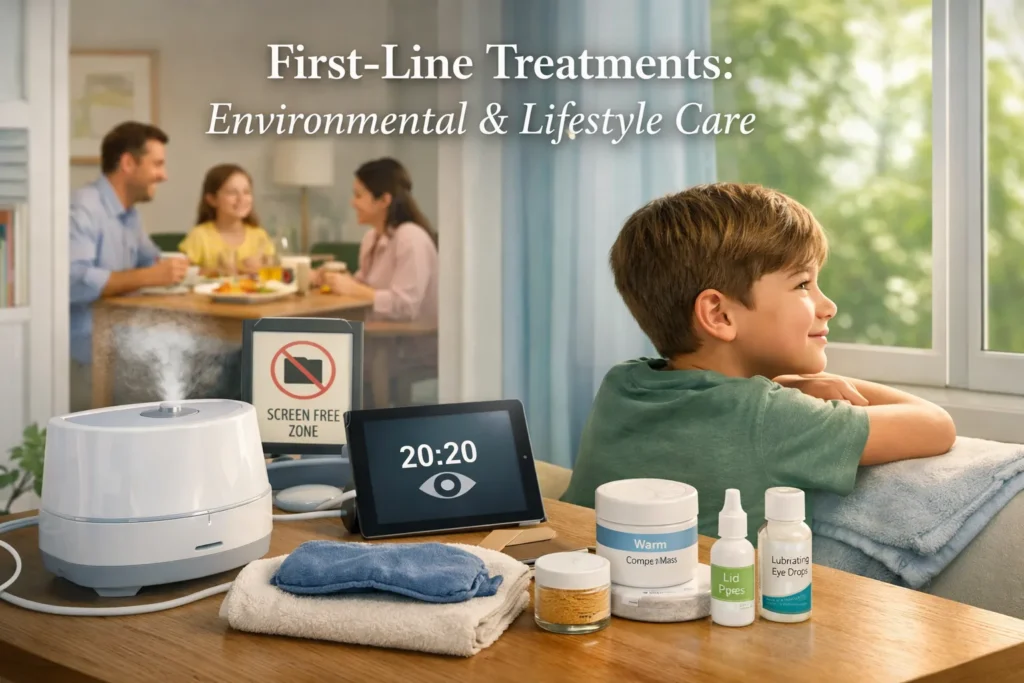
Reduce screen time: the 2-hour rule (limit recreational screen time to under 2 hours/day—0% of children under this threshold had severe gland atrophy in the research), the 20-20-20 rule (every 20 minutes, look 20 feet away for 20 seconds), blink reminders, and screen-free zones during meals and before bed.
Environmental modifications: a humidifier in the bedroom and study area, avoiding direct air vents on the face, encouraging outdoor time, and protecting eyes from wind and dust.
Warm compresses and lid hygiene: warm compresses for 10 minutes twice daily melt clogged oils, gentle lid scrubs remove bacteria and debris, and eyelid massage helps express the oils. In plain terms: think of it like unclogging a drain—warm compresses melt the oil, gentle massage pushes it out, and you’ll typically see improvement within 1-2 weeks.
Lubricating eye drops: preservative-free artificial tears 4-6 times daily, with lubricating ointment at bedtime for severe dryness; we avoid drops with preservatives like benzalkonium chloride, which can worsen dry eye.
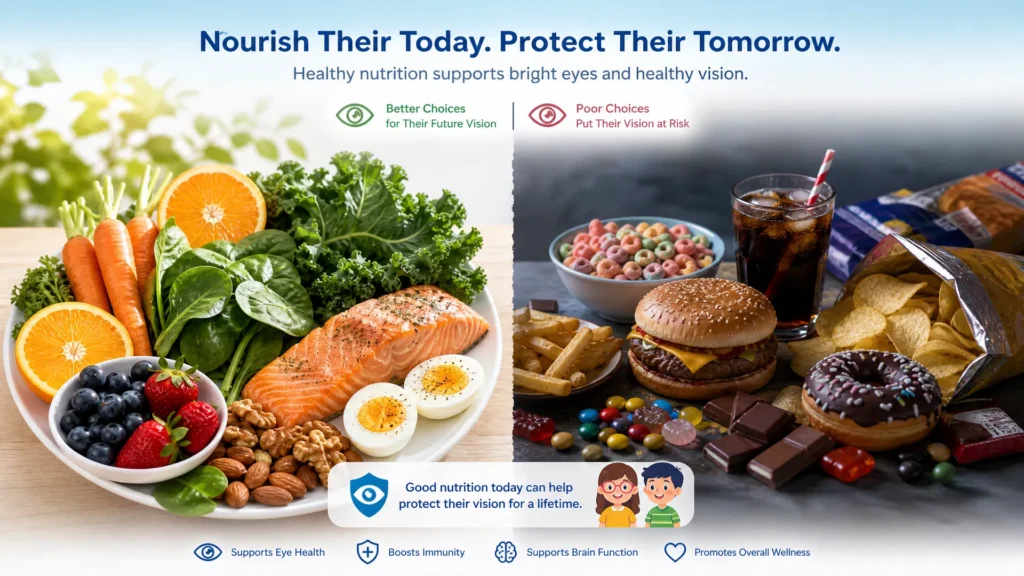
Omega-3 fatty acids (EPA and DHA) reduce inflammation, improve meibomian gland function, and increase tear production—we typically recommend 500-1000 mg EPA+DHA daily from fish oil or algae-based supplements, alongside food sources like fatty fish, flaxseeds, chia seeds, and walnuts. Vitamin A supports healthy ocular surface cells and tear production, from food sources like carrots, sweet potatoes, spinach, kale, liver, and eggs, or supplementation if deficient.
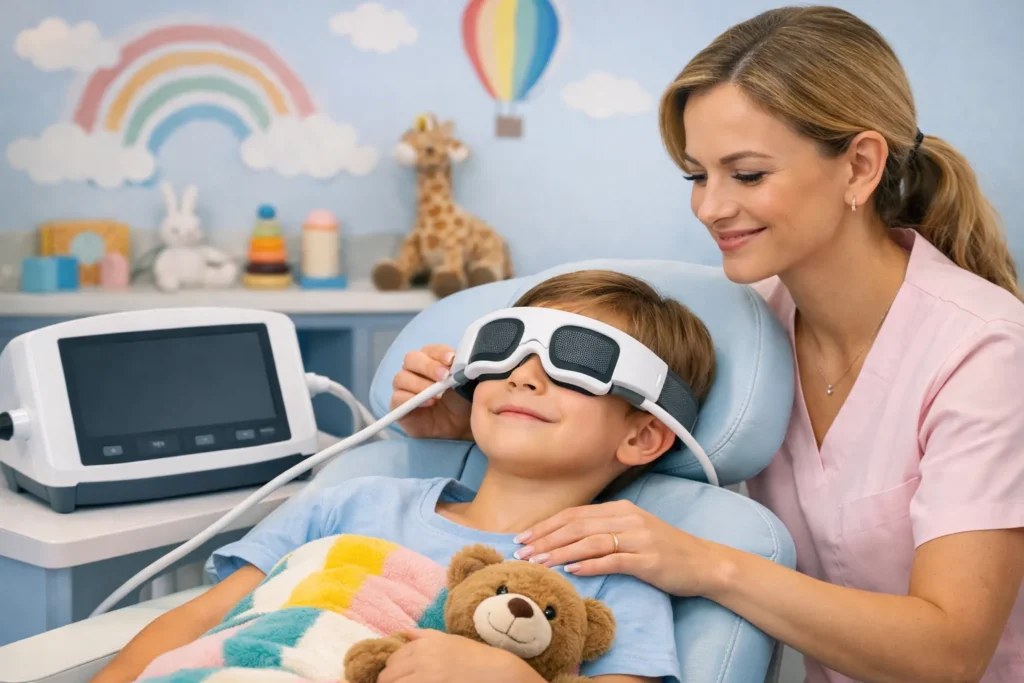
When first-line treatments aren’t enough, options include prescription anti-inflammatory medications (short-term topical corticosteroids, topical cyclosporine with limited pediatric use, or topical azithromycin), punctal plugs to retain tears for children with low tear volume, in-office meibomian gland treatments (thermal pulsation, intense pulsed light, or manual expression—with limited pediatric evidence but potential benefit in severe cases), and allergy management (topical antihistamines/mast cell stabilizers, oral antihistamines if needed, or allergy immunotherapy for severe cases).

Follow-up visits at 1, 3, and 6 months assess treatment response; meibography tracks meibomian gland health over time; and we adjust the treatment plan based on symptoms, clinical findings, and screen time habits.
From Constant Discomfort to Comfortable Eyes
—How We Helped These Children
Mia, age 9 — Screen Time Was Destroying Her Meibomian Glands
Mia did remote learning during the pandemic—6+ hours of screen time daily for school, plus 2-3 more for entertainment. By age 9, she was constantly rubbing her red, “sandy”-feeling eyes. Meibography revealed severely atrophied glands—shrunken and dying.
“We cut Mia’s recreational screen time to under 1 hour a day, started warm compresses twice daily, added omega-3 supplements, and used preservative-free artificial tears. Within 2 weeks her eyes were less red. Within 6 weeks she stopped rubbing them. After 6 months, repeat meibography showed her glands had partially recovered. The doctor said if we’d waited another year, the damage would have been permanent. Early intervention saved her eyes.”
— Mia’s mom, Rachel
Ethan, age 11 — Allergies and Dry Eye Were Causing Vision Problems
Ethan’s severe seasonal allergies left his eyes uncomfortable year-round; he started complaining of blurred vision and avoiding reading, and his grades dropped. His prescription was fine—the problem was dry eye from chronic allergic inflammation.
“We started Ethan on allergy immunotherapy, topical antihistamine drops, omega-3 supplements, and preservative-free artificial tears, plus warm compresses to improve his meibomian gland function. Within 3 months his dry eye symptoms were 80% better. His vision cleared up, and he was back to reading and doing well in school. Treating the underlying allergies was the key.”
— Ethan’s dad, David
Lily, age 7 — Vitamin A Deficiency Was Causing Severe Dry Eye
A very picky eater, Lily began complaining of dry, burning eyes with a dull, “foamy” appearance by age 7. She was diagnosed with vitamin A deficiency and xerophthalmia.
“We worked with a pediatric nutritionist to improve Lily’s diet and started a vitamin A supplement, plus lubricating ointment at night and artificial tears during the day. Within 4 weeks her eyes looked healthier. Within 3 months her dry eye symptoms were completely resolved. Nutrition matters more than I ever realized.”
— Lily’s mom, Amanda
Frequently Asked Questions
Your Questions About Dry Eye in Children—Answered
Q1: Isn’t dry eye an “adult problem”? Can children really get dry eye?
A1: Dry eye is no longer just an adult problem. Recent research shows 23.7% of children (nearly 1 in 4) now have dry eye disease, jumping to 44.1% (nearly 1 in 2) post-pandemic due to increased screen time. Children’s eyes are actually more vulnerable than adults’ because their meibomian glands are still developing.
Q2: My child uses screens for school. How can I reduce their screen time?
A2: We understand screen time for school is often unavoidable. The 20-20-20 rule (every 20 minutes, look 20 feet away for 20 seconds), blink reminders, a 5-10 minute break every hour, keeping recreational screen time under 2 hours per day, screen-free zones at meals and before bed, and 1-2 hours of outdoor play daily all help minimize the damage.
Q3: How do I know if my child’s dry eye is serious or just “tired eyes”?
A3: If symptoms persist beyond 2 weeks, or you notice frequent eye rubbing, red/bloodshot eyes, avoidance of reading, blurred vision, light sensitivity, visible blood vessels on the cornea, or vision loss, schedule a comprehensive evaluation. Even mild-seeming symptoms warrant early intervention to prevent permanent gland damage.
Q4: Are lubricating eye drops safe for children?
A4: Yes, preservative-free lubricating eye drops are safe for children. We avoid drops with preservatives like benzalkonium chloride, which can damage the ocular surface with frequent use, and will recommend specific brands and dosing for your child’s age and severity.
Q5: Will my child need to use eye drops forever?
A5: Not necessarily. Many children respond well to lifestyle modifications—reduced screen time, warm compresses, nutrition—and can eventually reduce or discontinue drops. Children with severe meibomian gland atrophy or underlying autoimmune disease may need longer-term treatment.
Q6: Can dry eye cause permanent vision loss in children?
A6: Yes, if left untreated. Chronic dry eye can cause corneal scarring, corneal neovascularization, vision loss, and increased risk of corneal infections. Early intervention can prevent these complications.
Q7: My child has allergies. Could that be causing their dry eye?
A7: Absolutely. 97.5% of children with seasonal or perennial allergic conjunctivitis also have dry eye. Allergic inflammation disrupts tear film stability, impairs meibomian gland function, and reduces tear mucin secretion. Treating the underlying allergies is often the key to resolving dry eye.
Q8: Should my child take omega-3 supplements?
A8: Yes, if they’re not getting enough from their diet. Omega-3s reduce inflammation, improve meibomian gland function, and increase tear production. We typically recommend 500-1000 mg EPA+DHA daily from fish oil or algae-based sources—always consult your pediatrician before starting supplements.
Q9: Can warm compresses really help?
A9: Yes—warm compresses are one of the most effective treatments for meibomian gland dysfunction, the most common cause of dry eye. They melt clogged oils so they can flow freely. Ten minutes twice daily typically shows improvement within 1-2 weeks.
Q10: What if my child refuses to do warm compresses or use eye drops?
A10: Compliance can be challenging with children. We suggest making it fun (a fun eye mask, music, or a short video during compresses), involving your child in the process (choosing their drops, tracking progress on a chart), positive reinforcement, and building it into a consistent daily routine. If compliance is still an issue, we can explore alternatives like punctal plugs or in-office therapies.
Q11: Your Child Deserves Comfortable, Healthy Eyes—Let’s Make It Happen
A11: If your child complains of tired, burning, itchy, or dry eyes—especially after screen time—don’t wait. Early intervention can prevent permanent meibomian gland damage and protect your child’s vision for life. Schedule a comprehensive dry eye evaluation today. We’ll assess your child’s symptoms, identify the underlying causes, and create a personalized treatment plan to restore their comfort and eye health.
References
- Villani E, Nucci P. Pediatric Dry Eye. American Academy of Ophthalmology. 2020 Jul 15.
- Zou Y, et al. Prevalence of dry eye disease among children: a systematic review and meta-analysis. BMJ Open Ophthalmol. 2025 Feb;10(1):e002014.
- Cremers SL, et al. New Indicator of Children’s Excessive Electronic Screen Use and Factors in Meibomian Gland Atrophy. Am J Ophthalmol. 2021 Sep;229:22-29.
- Kocamiş Ö, et al. Electronic device screen time and meibomian gland morphology in children. J Ophthalmic Vis Res. 2021 Oct-Dec;16(4):632-639.
- Moon JH, Kim KW, Moon NJ. Smartphone use is a risk factor for pediatric dry eye disease. BMC Ophthalmol. 2016 Oct;16(1):188.
- American Optometric Association. (n.d.). Omega-3 Fatty Acids and Eye Health.
- American Academy of Pediatrics. (2016). Media and Young Minds. Pediatrics. 2016 Nov;138(5):e20162591.
Not All Eye Care Providers Understand Pediatric Dry Eye—Here’s Why We’re Different
Pediatric dry eye is not the same as adult dry eye. Children’s eyes are still developing, they can’t always articulate their symptoms, and the causes and treatments differ.
- We understand the unique challenges of pediatric dry eye — child-friendly diagnostic tools, interpretation in the context of your child’s developmental stage, and a watchful eye for clinical signs even when reported symptoms are mild.
- Advanced diagnostic technology — meibography, tear film break-up time (F-BUT and NI-BUT), ocular surface staining, tear osmolarity, and OCT to visualize the tear meniscus and ocular surface layers.
- We address root causes, not just symptoms — whether the cause is screen time, allergies, nutrition, or autoimmune disease, we build the plan around the underlying driver, coordinating with your child’s allergist or nutritionist as needed.
- We treat the whole child — collaborating with your child’s pediatrician and other providers, and adding vision therapy alongside dry eye treatment when needed.
- We empower parents — clear, jargon-free explanations, hands-on training for warm compresses, lid hygiene, and eye drops, written instructions, and ongoing support.