Learning & Reading Struggles for Children
"My Child Is Smart, But Still Can't Read at Grade Level"
If your child is bright in conversation but shuts down with written work, if homework ends in tears every night, and if tutoring isn’t working—the problem may not be what they see, but how their eyes and brain work together.
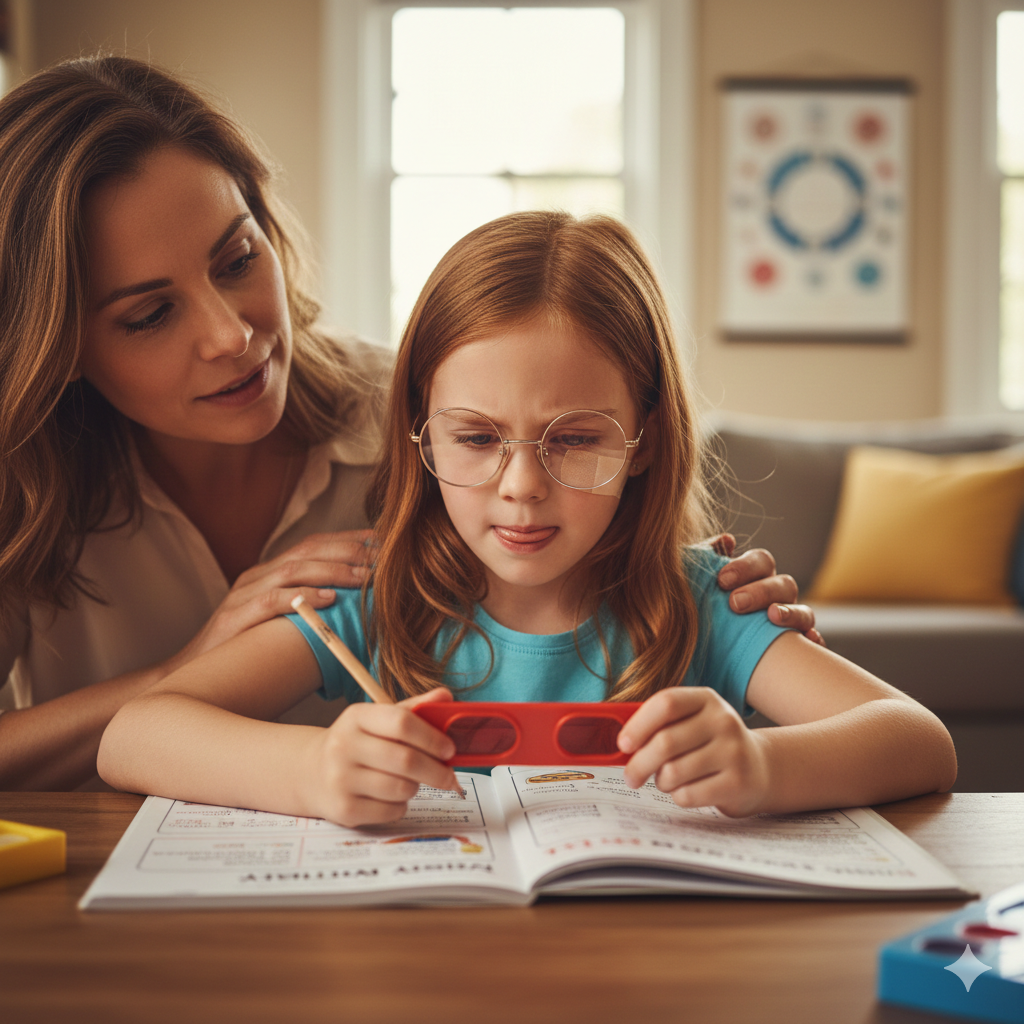

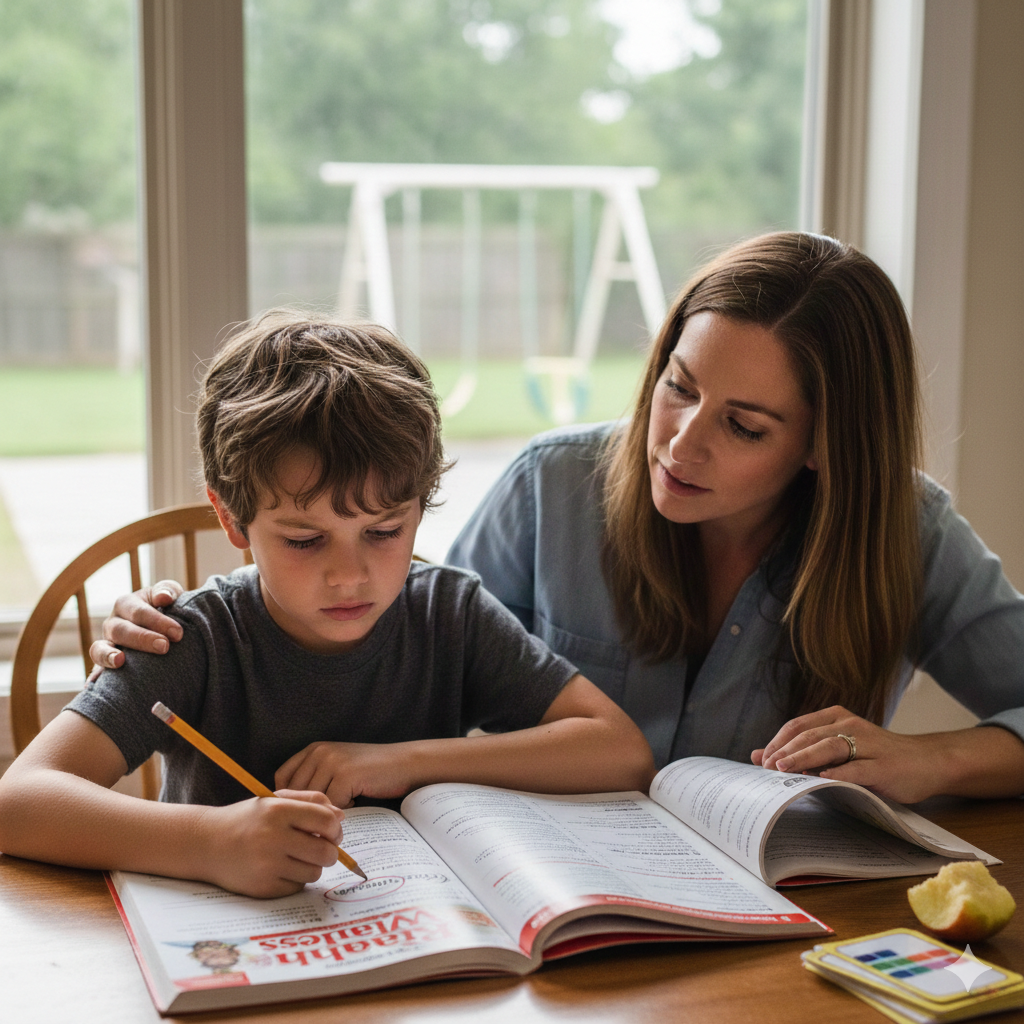
"My Little Boy Is in 3rd Grade and Still Not at Grade Level. He's Smart, But He Gets Upset So Easily When He Can't Figure Out a Word."
This is what one parent shared with us. And if you’re reading this, you probably know exactly how they feel.
You see the intelligence in your child’s eyes. They ask insightful questions, tell elaborate stories, and understand complex concepts when you explain them. But when it comes to reading and schoolwork, it’s like hitting a wall.
Does this sound like your child?
- Homework is a nightly battle that ends in tears, frustration, and exhaustion for both of you
- Reading is slow and labored — they lose their place, skip lines, or re-read the same sentence multiple times
- They avoid reading at all costs — making excuses, complaining of headaches, or simply refusing
- Tutoring isn’t working — despite extra help, phonics programs, and countless interventions, progress is minimal
- They’ve been labeled — “lazy,” “not trying hard enough,” “immature,” or even evaluated for ADHD or dyslexia
- You feel helpless — watching your capable child struggle while everyone says “they’re fine” or “they’ll grow out of it”
You’re not imagining it. Your child is not lazy. And you’re not alone.
One in four children have a vision problem that affects their ability to learn. [1] And most of them have no idea—because they passed the school vision screening.
They Passed the School Vision Screening. So Why Are They Still Struggling?

The Missing Link: Vision Beyond 20/20
Here’s what most parents don’t know: passing a school vision screening doesn’t mean your child’s vision is ready for learning.
School screenings only test if your child can see letters on a chart 20 feet away. But reading happens at 16 inches. And learning requires over 17 visual skills that are never tested in a standard screening. [2]
The Truth About Vision and Learning:
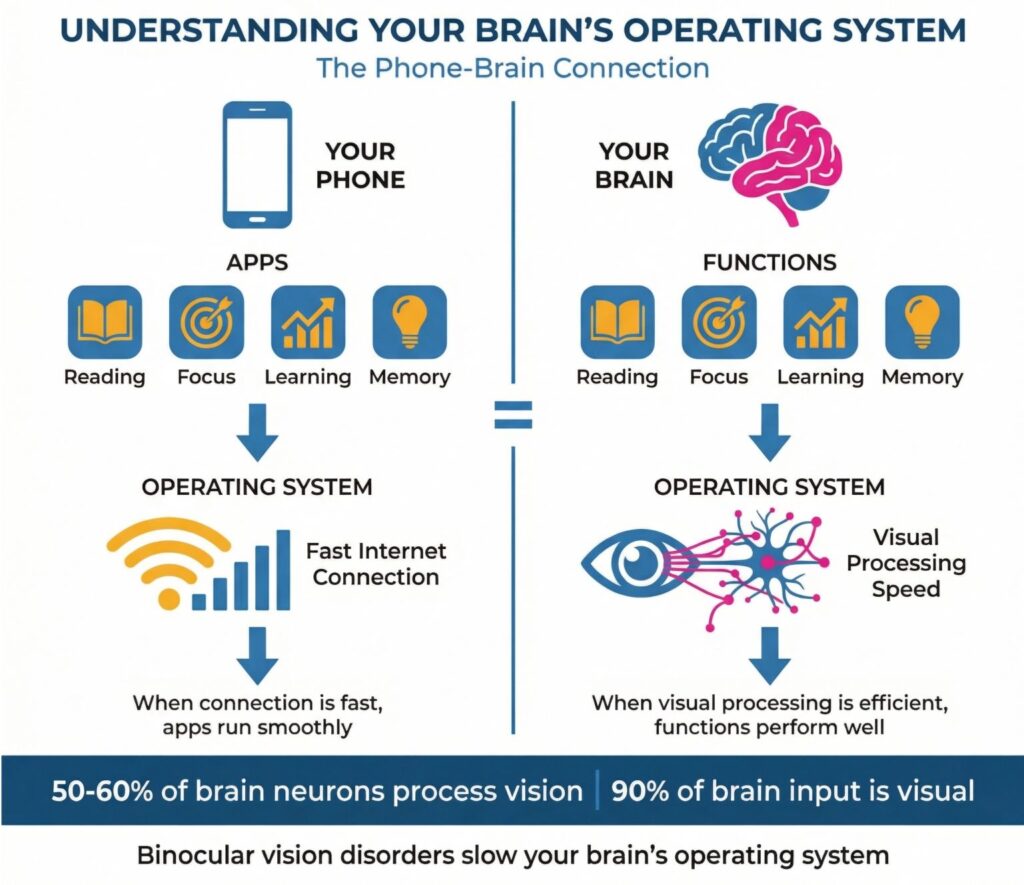
When it comes to learning, engaging with the world, and hitting developmental milestones, perhaps nothing is more important to a child than their vision. [3]
Yet:
- 1 in 4 children (25%) have a vision problem that affects their ability to learn [1]
- 80% of children with reading difficulties have problems with how their eyes move and track [4]
- School vision screenings miss 75% of vision problems that impact learning [5]
- Amblyopia (lazy eye) is the #1 cause of vision loss in children, affecting 2-4% of children [6]
Here’s What’s Really Happening:
Your child might have perfect 20/20 vision but still struggle because:
- Their eyes don’t work together as a team (convergence insufficiency)
- They can’t track smoothly across a page (eye movement problems)
- Their brain can’t efficiently process what their eyes are seeing (visual processing delays)
- They can’t remember the order of letters and words (visual sequential memory deficits)
This is why tutoring doesn’t work. This is why they’re “smart but struggling.”
The foundation—vision—is compromised.
“If your child finds reading difficult, the problem may not be what they see—but how they use their vision.” [2]
Why Bright Children Struggle to Read
We often meet concerned parents whose children fall behind in school—even though they have 20/20 eyesight. One parent described their child as curious and capable, yet unable to keep up with reading assignments. The real issue? A visual processing problem that had nothing to do with “bad” eyesight. [2]
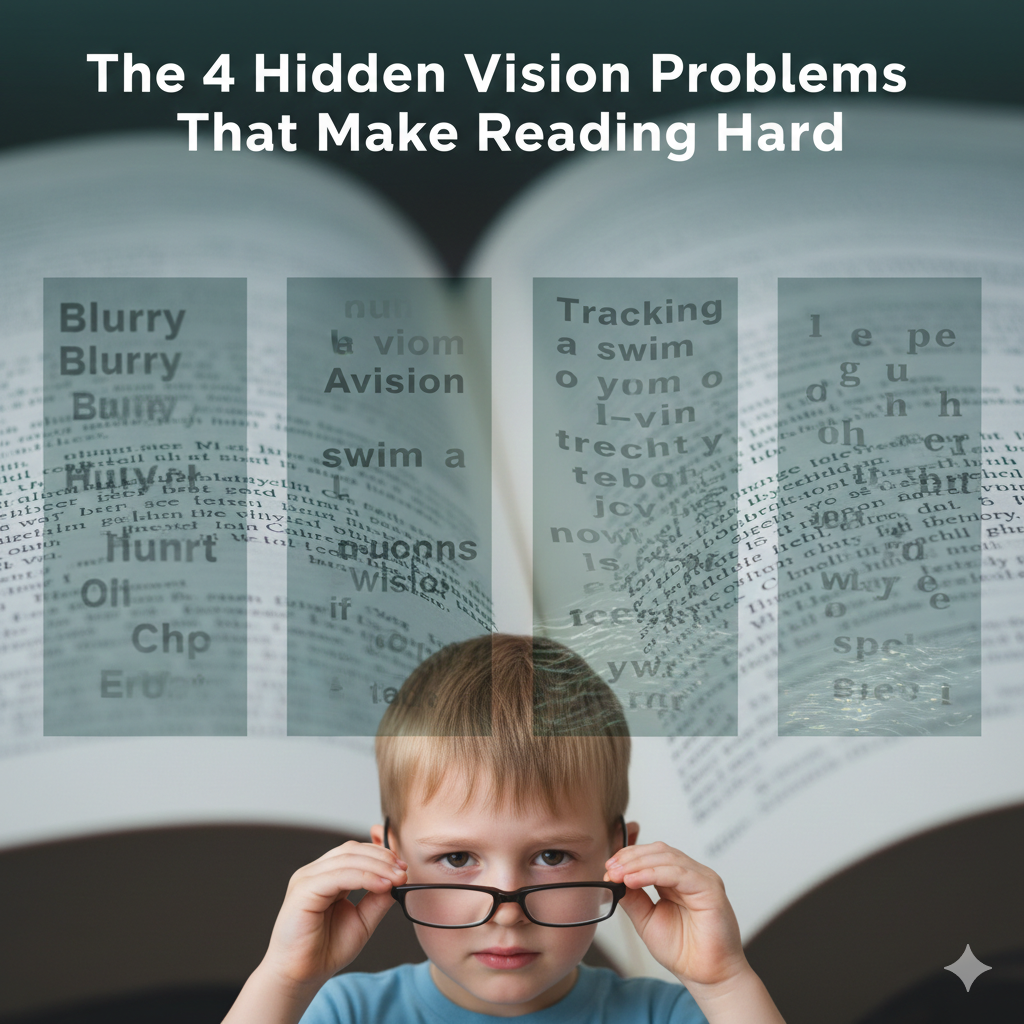
Here are the four vision-related challenges that often go undetected in struggling readers:
Poor Eye Tracking: When Eyes Can’t Follow the Words
Eye tracking is how smoothly and accurately your child’s eyes move across a page. When this skill isn’t well developed, reading becomes exhausting.
Signs to watch for:
- Skipping or rereading lines
- Using a finger to stay on track
- Words appearing to “jump” or move on the page
- Difficulty copying from the board
- Short attention span for reading
What research shows:
80% of children with reading difficulties have problems with eye movements. Poor eye tracking can reduce reading speed by up to 50% and significantly impact comprehension. [4]
Convergence Insufficiency: When the Eyes Don’t Work Together
Convergence insufficiency happens when your child’s eyes struggle to turn inward and stay aligned while focusing on books or tablets.
Your child may:
- Experience double vision while reading
- Complain of headaches or eye fatigue
- Avoid homework and near tasks
- Cover or close one eye when reading
- Have difficulty concentrating
What research shows:
Convergence insufficiency affects 5-13% of school-aged children and is significantly more common in children with reading difficulties. Treatment leads to significant improvements in reading performance. [7]
Focus Problems: Trouble Maintaining Clear Vision
This is your child’s ability to focus at near distances for extended periods. If their visual system fatigues quickly, the result is blurry vision and reduced reading stamina.
What to look for:
- Blurry words after just a few minutes
- Slow reading and frequent eye rubbing
- Problems copying from the board
- Blurry vision when looking from board to desk
- Fatigue during visual tasks
What research shows:
Children with reading difficulties are twice as likely to have focus problems compared to children without reading problems. [8]
Visual Processing Delays: The Brain Can’t Keep Up
Visual processing is how your child’s brain interprets what their eyes send it. Even if they can see clearly, they may struggle to understand or remember what they read.
Signs include:
- Reversing letters or numbers (b/d, p/q) beyond age 7
- Difficulty recalling what they just read
- Trouble with spelling, even with strong verbal skills
- Poor reading comprehension despite adequate word recognition
- Messy handwriting or trouble staying within lines
What research shows:
A 2015 study found that visual sequential short-term memory (the ability to remember the order of letters and words) is the specific visual skill that predicts reading ability. This is never tested in standard screenings. [9]
“ADHD”
👀 What it looks like:
- Fidgeting and restleness
- Avoidance of desk work
- Inattention during reading
- Difficulty concentrating
🔍 What it might actually be:
- Eyes that can’t sustain clear focus
- Eyes that don’t work together
- Visual fatigue and strain
The Difference:
When vision is treated, “ADHD symptoms” often disappear in the classroom.
REAL STORY:
Sophia, Age 10
From ADHD Evaluation to Clear Vision
Sophia was being evaluated for ADHD due to fidgeting and apparent inattention during reading. Before starting medication, her parents sought a vision evaluation, which found that she couldn’t sustain clear focus for reading.
The Outcome:
After vision therapy and reading glasses, her classroom attention improved dramatically, and her teacher reported she no longer showed signs of ADHD in the classroom. [10]
“Dyslexia”
👀 What it looks like:
- Letter reversals (b/d, p/q)
- Reading difficulties
- Slow processing speed
🔍 What it might actually be:
- Visual discrimination problems
- Eye tracking issues
- Visual processing speed problems
The Difference:
True dyslexia is a sound-based disorder. Visual issues respond to vision therapy; dyslexia requires different interventions.
REAL STORY:
Marcus, Age 12
Misdiagnosed Dyslexia, Actually Vision
Marcus had been diagnosed with dyslexia based on his letter reversals and reading difficulties. However, a comprehensive vision evaluation revealed normal sound processing (the core problem in true dyslexia) but significant deficits in visual discrimination and visual processing speed.
The Outcome:
After 6 months of vision therapy, his reading improved by two grade levels and letter reversals resolved completely. It wasn’t dyslexia—it was vision.
“Lazy” or “Not Trying”
👀 What it looks like:
- Avoidance of tasks
- Incomplete work
- Giving up easily
- Emotional meltdowns during homework
🔍 What it might actually be:
- Visual fatigue and eye strain
- Double vision
- Brain exhaustion from compensation
The Difference:
These children are working twice as hard for half the results. Their brains are exhausted from compensating for inefficient vision.
REAL STORY:
Emma, Age 9
Not Lazy—Just Exhausted
Emma’s parents were frustrated by her apparent laziness and refusal to do homework. Teachers noted she seemed unmotivated and gave up easily. Her parents felt she simply wasn’t trying hard enough.
The Outcome:
A vision evaluation revealed significant eye strain and convergence insufficiency. After treatment, Emma’s attitude toward homework transformed. She was never lazy—she was exhausted from the effort of fighting her vision problems.
The Research That Changes Everything:
A 2015 study found that reading disorders and ADHD have different visual processing problems:
- Reading disorders are linked to problems with visual discrimination and remembering the order of letters and words
- ADHD is linked to different visual-spatial processing issues
- Visual sequential memory (remembering the order of what you see) is the ONLY visual skill that predicted reading ability [9]
What this means for your child:
If your child has been labeled with ADHD or dyslexia, but medication or interventions aren’t helping with reading, a comprehensive vision evaluation should be the next step. We test for visual sequential memory and all 17+ visual skills that standard screenings miss.
Why BVI Finds What Others Miss
We Don't Just Check If They Can See. We Check If They Can Learn.
A 2015 study found that reading disorders and ADHD have different visual processing problems:
- Reading disorders are linked to problems with visual discrimination and remembering the order of letters and words
- ADHD is linked to different visual-spatial processing issues
- Visual sequential memory (remembering the order of what you see) is the ONLY visual skill that predicted reading ability [9]
|
Feature
|
Standard Screening
|
Brain Vision Institute Evaluation
|
|---|---|---|
|
Testing Distance
|
20 Feet Only
|
16 Inches (Reading Distance)
|
|
Visual Skills
|
Basic Acuity (20/20)
|
All 17+ Functional Skills needed for reading and learning.
|
|
|
|
✅ Eye teaming and convergence ✅ Eye tracking and eye movements
|
|
|
|
✅ Focus flexibility and stamina ✅ Visual sequential short-term memory (the skill that predicts reading ability) [9]
|
|
|
|
✅ Visual processing speed and visual discrimination ✅ Visual-motor integration
|
|
Brain Integration
|
Not Tested / Evaluated
|
✅ How the brain interprets what the eyes see ✅ We Find the root cause and have tools to fix it.
|
“Unlike a basic vision screening, we evaluate the full visual system—from eye movement and focusing to how the brain interprets visual input.” [2]
How We Help: Your Child's Path to Reading Success
Your Child’s Path to Reading Success
Comprehensive Brain-Visual Evaluation for Learning
1
We go far beyond a standard eye exam or school screening. Our comprehensive evaluation assesses all 17+ visual skills your child needs for reading and learning—including visual sequential memory, the specific skill research shows predicts reading ability. [9]
We use age-appropriate tests and advanced technology to identify exactly which visual skills are holding your child back.
What we assess: Eye teaming and convergence, eye tracking and movements, focus flexibility and stamina, visual processing speed, visual discrimination, visual sequential memory, visual-motor integration, and 10+ other skills critical for reading.
Personalized Learning Support Plan
2
Based on your child’s unique assessment, we create a customized program using the 6 Pillars of CogniViiSION®. Your plan may include targeted vision therapy, therapeutic lenses, photobiomodulation, and nutritional support—all designed to build the visual foundation for learning.
You’ll receive: A clear, detailed report explaining exactly why your child is struggling and a step-by-step plan to address the root cause, not just the symptoms.
Build the Foundation for Lifelong Learning
3
Through one-on-one vision therapy sessions, we guide your child as they build new neural pathways and strengthen weak visual skills. Vision therapy is like physical therapy, but for the eyes and brain. [2]
We work on everything from eye tracking to visual sequential memory, helping your child unlock their true potential.
The result: Reading becomes easier. Homework battles end. Confidence returns. Your bright child can finally shine.
“Vision therapy is an evidence-based program that has been clinically proven to increase reading levels, enhance comprehension, maintain longer attention spans and even improve sports performance.” [2]
Learn more about our comprehensive
5-Step Journey from consultation to lifelong support.
Want to see our complete process?
“I Just Want Reading to Finally Click for My Child.”
These parents felt the same way. Here’s what happened when we found the root cause.
Aiden, Age 8
The “Struggling Reader”
What We Found:
His eyes weren’t working together as a team, and he couldn’t track smoothly across a page. Every time he tried to read, his brain was working overtime just to keep the words in focus.
The Problem:
Aiden was reading well below grade level despite phonics interventions and tutoring. His teachers noted he was bright in class discussions but “lazy” when it came to reading tasks. His parents were told he just needed to “try harder.”
The Results:
After 3 months of vision therapy:
- Reading fluency improved by 20 words per minute
- Comprehension scores moved from the 25th to 65th percentile
- Homework is no longer a battle
- Aiden now reads for pleasure [10]
Marcus, Age 12
The “Dyslexic Child”
What We Found:
His sound processing was normal (the core problem in true dyslexia), but he had significant deficits in visual discrimination and visual processing speed. It wasn’t dyslexia—it was vision.
The Problem:
Marcus had been diagnosed with dyslexia based on his letter reversals and reading difficulties. Despite intensive phonics interventions, he wasn’t improving. His parents felt helpless.
The Results:
After 6 months of vision therapy:
- Reading improved by two grade levels
- Letter reversals resolved completely
- He’s now reading chapter books for fun
- His confidence has soared [10]
Parent Testimonial:
A Message from Dr. Ingryd Lorenzana

"As a child, I suffered a brain injury that had lifelong consequences, including struggles with learning and reading. I know the frustration, the tears, and the feeling of being 'smart but struggling.' My personal healing journey is what birthed CogniViiSION® and the Brain Vision Institute. I created this practice to be the place I wish my parents had found for me—a place that looks beyond the surface, finds the root cause, and gives children the foundation they need to thrive. Your bright child deserves to shine. We will find what others have missed, and we will walk this journey with you, every step of the way."
Frequently Asked Questions
Q1: My child passed the school vision screening. How can they still have a vision problem?
A1: School screenings only test if your child can see letters on a chart 20 feet away (the 20/20 test). They don’t test the 17+ visual skills needed for reading and learning, like eye teaming, tracking, focusing, visual sequential memory, and visual processing. Research shows that school screenings miss 75% of vision problems that impact learning [5]. Our comprehensive evaluation tests all the skills that standard screenings miss—including visual sequential memory, the specific skill that research shows predicts reading ability. [9]
Q2: How is this different from a regular eye exam?
A2: A standard eye exam checks for eye health and whether your child needs glasses. We go much deeper. We assess how your child’s eyes work together as a team, how they track across a page, how they process visual information, and how their brain interprets what they see. We’re testing for functional vision—the skills your child needs to read and learn.
Q3: What if my child has already been diagnosed with ADHD or dyslexia?
A3:
Visual processing issues can look exactly like ADHD or dyslexia, or they can co-exist with these conditions. Research shows that reading disorders and ADHD have different visual processing problems, and visual sequential memory is the specific skill that predicts reading ability. [9] Many children we see have been labeled with ADHD or dyslexia when the real issue is vision. Even if your child does have ADHD or dyslexia, addressing underlying visual issues can significantly improve their ability to focus, read, and learn.
Q4: Will vision therapy really help my child read better?
A4: Yes. Research shows that over 75% of children show normal vision function after vision therapy for convergence insufficiency, and studies demonstrate significant improvements in reading performance. [7] Case studies show reading fluency improvements of 20+ words per minute and comprehension scores jumping from the 25th to 65th percentile in just 3 months. [10] Unlike some learning disabilities, visual processing problems are highly treatable.
Q5: How long does vision therapy take?
A5: Every child is different, but most children see improvements within 3-6 months of consistent vision therapy. Some children, like Aiden in our case study, see dramatic improvements in just 3 months. [10] We’ll give you a clear timeline based on your child’s specific needs during the evaluation.
Q6: My child is already in tutoring. Will this help?
A6: If tutoring isn’t working, it’s often because the foundation—vision—is compromised. Imagine trying to build a house on a cracked foundation. No matter how good the materials (tutoring, phonics programs), the house won’t be stable. Vision therapy fixes the foundation. Once the visual skills are in place, tutoring and learning interventions become much more effective.
Q7: Is this covered by insurance?
A7: We provide you with all the necessary documentation to submit to your insurance provider for reimbursement. Many families receive partial or full coverage. We also offer flexible payment options because we believe every child deserves the chance to thrive.
References
[1] American Optometric Association. (2018). School performance bridled by poor vision, visual disorders. https://www.aoa.org/news/clinical-eye-care/health-and-wellness/reading-proficiency-and-eye-exams
[2] Brain Vision Institute. (2025). Vision Therapy in South Barrington. https://www.brain-vision.org/eye-care-services/vision-therapy-optometrist/
[3] GoCheck Kids. (2023). Pediatric Vision Photoscreening: An Evidence-Based Overview.
[4] Kibby, M. Y., et al. (2015). Visual processing in reading disorders and attention-deficit/hyperactivity disorder. As cited in Foundations Cognitive, “Vision Beyond 20/20: How Visual Processing Issues Impact Reading and Learning.” https://foundationscognitive.com/blog/visual-processing-issues
[5] Optometry and Vision Science. Study finding that standard school screenings failed to detect 75% of children with vision problems that could impact learning.
[6] National Center for Children’s Vision & Eye Health. (2020). Prevent Blindness 2020 Snapshot Report. https://preventblindness.org/wp-content/uploads/2020/07/Snapshot-Report-2020condensedF.pdf
[7] Archives of Ophthalmology. Study on convergence insufficiency treatment outcomes and reading performance improvements.
[8] Optometry and Vision Science. Study on accommodative disorders and reading difficulties.
[9] Kibby, M. Y., Vadnais, S. A., Jagger, A. C., & Stacy, M. (2015). Visual processing in reading disorders and attention-deficit/hyperactivity disorder and its contribution to basic reading ability. Frontiers in Psychology, 6, 1635. https://doi.org/10.3389/fpsyg.2015.01635
[10] Foundations Cognitive. (2025). Vision Beyond 20/20: How Visual Processing Issues Impact Reading and Learning. https://foundationscognitive.com/blog/visual-processing-issues
Stop Watching Your Bright Child Struggle. Find the Answer Today.
You’ve tried tutoring. You’ve tried interventions. You’ve been told “they’re fine” or “they’ll grow out of it.” But you know something is wrong, and you’re right.
"Don't let your child suffer in silence. Vision therapy might just be the solution you have been seeking."[2]
It’s time to look beyond the surface and find the root cause. Schedule a comprehensive brain-visual evaluation and discover what’s been holding your child back.