Children’s Myopia Progressions
"Your Child's Prescription Is Getting Stronger Every Year. You've Been Told 'It's Just Genetic.' But What If There Was Something You Could Do?"
Myopia control can slow or stop your child’s vision from getting worse—protecting them from serious eye diseases later in life.

By
2050,
You're Not Too Late—And You're Right to Be Concerned
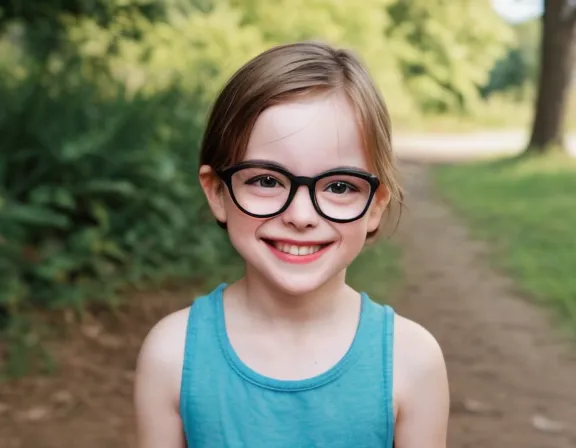
You’re not imagining it. Every year, your child’s prescription gets a little stronger. You update the glasses, and six months later, they’re squinting again. You’ve been told “it’s just genetic” or “kids’ eyes change as they grow.” And while that’s partly true, there’s more to the story.
“Having some mom guilt over my child’s myopia… she’s now -5.25 and I wish I had known about this sooner.” – Parent Mom
If you’re reading this, you’re already asking the right questions. And here’s what you need to know: myopia progression is not inevitable. There are proven ways to slow it down—and the earlier you start, the better the outcome.
The Hidden Risk Most Parents Don’t Know About:
Here’s what many eye doctors don’t explain: myopia isn’t just about needing stronger glasses. High myopia (severe nearsightedness) significantly increases your child’s risk of developing sight-threatening eye diseases later in life, including:
- Retinal detachment
- Glaucoma
- Cataracts (at a younger age)
- Macular degeneration
- Even blindness
The higher your child’s myopia, the greater the risk. [1]
And here’s the urgent part: we’re in the middle of a global myopia epidemic. Research from the Brien Holden Vision Institute predicts that by 2050, 50% of the world’s population will be myopic, and 10% will have high myopia. [2]
Your child is part of the first generation to face this epidemic—but you have the power to change their trajectory.
The Problem with
"Just Updating Glasses Every Year"
Why Stronger Glasses Aren't Enough
Here’s the problem:
glasses and standard contact lenses correct your child’s vision, but they don’t treat the underlying cause of myopia or slow its progression. [1]
Think of it this way:
if your child had a cavity, you wouldn’t just keep filling it year after year without addressing why cavities keep forming. You’d change their diet, improve their brushing habits, and prevent future cavities. Myopia control works the same way—it addresses the root cause, not just the symptom.
What Causes Myopia to Progress?
Myopia occurs when your child’s eyeball grows too fast and gets longer, or when the cornea (the clear front part of the eye) becomes too curved. This causes light to focus in front of the retina instead of directly on it, making distant objects appear blurry. [3]
Three major factors drive myopia progression:
But here’s the good news:
Even if myopia is genetic, progression is not inevitable. Environmental factors play a huge role, and myopia control treatments can slow or stop progression—even in children with a family history.
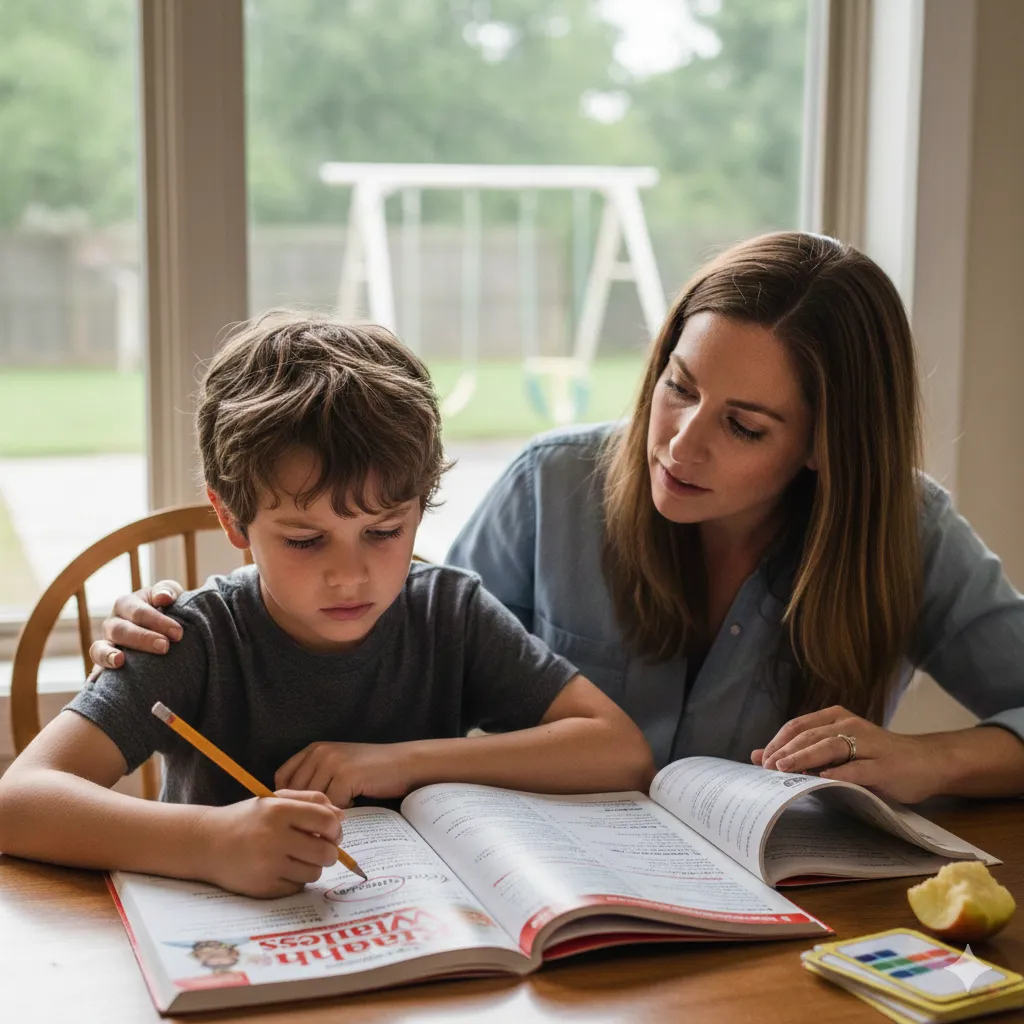
They're Bright, But Progress Feels Impossible
You see the intelligence. You see the effort. But when it comes to schoolwork, sports, or even everyday tasks, something just isn’t connecting.
What Causes Visual Processing Challenges?
Understanding the Root Causes
Visual processing challenges don’t happen in isolation. They often develop as a result of underlying vision conditions, developmental delays, or neurological events. Understanding the cause helps us create the most effective treatment plan for your child.
Binocular Vision Disorders
When the eyes don’t work together as a coordinated team, the brain receives conflicting visual information, making it difficult to process what’s being seen.
- Convergence Insufficiency — The eyes struggle to turn inward and stay aligned when focusing on near tasks like reading or writing
- Accommodative Dysfunction — The eyes have difficulty changing focus from near to far (like copying from the board)
- Eye Tracking Problems — The eyes don’t move smoothly across a page, causing skipping, re-reading, and loss of place
- Eye Teaming Issues — The eyes don’t work together efficiently, leading to double vision, headaches, and visual fatigue
Concussions and Head Injuries
Even “mild” concussions can disrupt the brain-vision connection, leading to:
- Difficulty tracking moving objects
- Trouble with visual memory and sequencing
- Sensitivity to light and visual stimuli
- Reduced visual processing speed
- Problems with eye teaming and focusing
Many children who struggle with visual processing after a concussion were never formally evaluated for vision problems.
Acquired Developmental Delays
Certain events or conditions during early development can affect how the visual system matures:
- Premature birth — The visual system may not fully develop in the womb
- Developmental trauma or illness — Prolonged hospitalization, oxygen deprivation, or neurological events
- Lack of early visual stimulation — Limited tummy time, restricted movement, or excessive screen time during critical developmental windows
Environmental and Lifestyle Factors
Modern life can also contribute to visual processing challenges:
- Excessive screen time — Prolonged near work without breaks can strain the visual system
- Reduced outdoor play — Less time spent using distance vision and dynamic visual skills
- Lack of cross-body movement — Activities like crawling, climbing, and ball play are essential for visual-motor integration
Congenital Developmental Delays
Some children are born with conditions that affect visual development:
- Genetic conditions — Down syndrome, cerebral palsy, autism spectrum disorder
- Birth complications — Oxygen deprivation, stroke, or neurological injury during birth
- Neurological differences — Conditions that affect how the brain processes sensory information
Amblyopia (Lazy Eye)
When one eye has significantly reduced vision that can’t be fully corrected with glasses, the brain favors the stronger eye. This can impair depth perception, visual memory, and the ability to process visual information from both eyes simultaneously.
Strabismus (Eye Turn/Misalignment)
When one or both eyes turn inward, outward, upward, or downward, the brain may suppress the image from the turned eye to avoid double vision. This disrupts depth perception, spatial awareness, and visual processing efficiency.
The good news? Regardless of the cause, visual processing challenges can be treated with targeted vision therapy.
How We Help: Your Child's Path to Reading Success
Your Child’s Pathway to Progress
We don’t guess. We don’t assume. We assess, identify, and treat the specific visual processing skills that are holding your child back.
Comprehensive Brain-Visual Evaluation for Learning
1
We assess all seven visual processing skills to identify exactly where the breakdown is happening.
What we measure:
- Visual discrimination (recognizing differences)
- Visual figure-ground (filtering distractions)
- Form constancy (recognizing objects in different contexts)
- Visual closure (completing partial information)
- Visual memory (recalling what was seen)
- Visual sequential memory (remembering order)
- Visual motor integration (coordinating vision and movement)
Personalized Treatment Plan
2
Based on your child’s evaluation, we create a customized neuro-vision therapy program that targets their specific visual processing weaknesses.
You’ll receive:
- A clear explanation of which visual processing skills are inefficient and how they’re affecting your child’s daily life
- A step-by-step treatment plan designed to retrain the brain-vision connection
- Ongoing support and progress tracking
Transform Through Therapy
3
Through targeted vision therapy exercises, we retrain your child’s brain to process visual information more efficiently.
The result:
- Faster reading speed and better comprehension
- Neater handwriting and improved fine motor skills
- Better hand-eye coordination and confidence in sports
- Less frustration, more progress, and a child who feels capable again
Want to see our complete 5-step process? Learn more about how we work – Schedule your evaluation.
The Research That Changes Everything:
A 2015 study found that reading disorders and ADHD have different visual processing problems:
- Reading disorders are linked to problems with visual discrimination and remembering the order of letters and words
- ADHD is linked to different visual-spatial processing issues
- Visual sequential memory (remembering the order of what you see) is the ONLY visual skill that predicted reading ability [9]
What this means for your child:
If your child has been labeled with ADHD or dyslexia, but medication or interventions aren’t helping with reading, a comprehensive vision evaluation should be the next step. We test for visual sequential memory and all 17+ visual skills that standard screenings miss.
What Parents Say
“Finally, Something That Worked”
Frequently Asked Questions
Your Questions, Answered
Is it too late if my child is already -5.00 or higher?
No, it’s never too late to start myopia control. While it’s ideal to begin when myopia is mild, even children with high myopia can benefit from slowing further progression. The goal is to prevent your child from reaching -6.00, -8.00, or higher—where the risk of serious eye diseases increases significantly.
How do I choose between ortho-K, atropine, MiSight, and red light therapy?
That’s exactly what we’re here to help you with. During your comprehensive myopia assessment, we’ll evaluate your child’s age, prescription, lifestyle, and preferences. We’ll explain the pros and cons of each option and help you make an informed decision. Many children benefit from combining treatments (e.g., ortho-K + atropine) for maximum effectiveness.
Is myopia really genetic? Can we do anything about it?
Yes, myopia is partly genetic. If one parent has myopia, there’s a 25% chance your child will develop it. If both parents have myopia, the risk jumps to 50%. However, genetics is not destiny. Environmental factors—like screen time, outdoor time, and near work—play a huge role in myopia progression. Myopia control treatments can slow or stop progression, even in children with a strong family history.
Will my child need glasses forever?
Myopia control doesn’t eliminate myopia—it slows or stops progression. If your child is already myopic, they will likely need some form of vision correction (glasses, contacts, or surgery) for the rest of their life. However, by slowing progression now, you’re reducing their risk of high myopia and serious eye diseases later.
How much does myopia control cost?
The cost varies depending on the treatment option you choose. Ortho-K and specialty lenses tend to be more expensive upfront, while atropine drops and red light therapy are more affordable. However, the investment in myopia control is an investment in your child’s long-term eye health. High myopia increases the risk of retinal detachment, glaucoma, and blindness—conditions that are far more costly (financially and emotionally) to treat later in life.
We’ll provide transparent pricing during your consultation, and we accept many insurance plans.
Can my child still play sports with myopia control treatments?
Absolutely! In fact, many treatments (like ortho-K and MiSight) are ideal for active kids. Ortho-K lenses are worn at night, so your child doesn’t need to wear anything during the day. MiSight lenses are daily disposables, so there’s no risk of losing expensive lenses during sports.
What if my child doesn't comply with treatment?
We understand that compliance can be a challenge, especially with younger children. That’s why we work closely with families to find a treatment that fits your child’s lifestyle. Red light therapy, for example, takes just 3-5 minutes twice a day and can be done at home. Ortho-K only requires nightly wear. And MiSight lenses are as easy as putting in contacts once in the morning.
We’ll also provide ongoing support and check-ins to help your child stay on track.
How long does myopia control take to work?
You’ll start seeing results within 3-6 months. We measure axial length (eye growth) and refraction (prescription changes) at every visit to track progress. Most children see a significant slowing of progression within the first year.
References
- Optometrists Network. (n.d.). Signs of Visual Processing Information Dysfunction. Retrieved from https://www.optometrists.org/vision-therapy/guide-vision-and-learning-difficulties/guide-to-visual-information-processing/signs-of-visual-processing-information-dysfunction/
- Koller, H. P. (2012). Visual processing and learning disorders. Pediatric Clinics of North America, 59(4), 803-809. https://pubmed.ncbi.nlm.nih.gov/22847031/
- American Optometric Association. (n.d.). Vision-related learning problems. Retrieved from https://www.aoa.org/healthy-eyes/eye-and-vision-conditions/vision-related-learning-problems
- College of Optometrists in Vision Development. (n.d.). Visual processing disorders. Retrieved from https://www.covd.org
- Neuro-Optometric Rehabilitation Association. (n.d.). Conditions treated by neuro-optometric rehabilitation. Retrieved from https://noravisionrehab.org/patients-caregivers/conditions-treated-by-neuro-optometric-rehabilitation
- All About Vision. (n.d.). Visual processing disorders in children. Retrieved from https://www.allaboutvision.com
- Brain Vision Institute. (n.d.). Visual processing challenges. Retrieved from https://www.brain-vision.org
Your Child Deserves to Thrive, Not Just Survive
If your child is working hard but not seeing progress, if they’re frustrated and you’re feeling helpless, it’s time to look deeper.
Visual processing problems are real. They’re treatable. And they don’t have to define your child’s future.
Schedule a comprehensive brain-visual evaluation and discover what’s been holding your child back.
It’s time to look beyond the surface and find the root cause. Schedule a comprehensive brain-visual evaluation and discover what’s been holding your child back.