Children’s Therapeutic Contact Lenses
"Your Child's Doctor Said They Need Contact Lenses. You're Wondering: 'Isn't My Child Too Young?'"
When your child has keratoconus, high myopia, corneal damage, or a high prescription with developmental delays, therapeutic contact lenses aren’t about appearance—they’re about medical necessity. They can restore vision that glasses can’t correct, slow myopia progression, prevent surgery, and eliminate the distortion that’s making it harder for your child to see and learn.
Up to
Reduction in myopia progression with MiSight® 1 Day lenses
This Is Medical, Not Cosmetic
Let's Be Clear: Therapeutic Contact Lenses for Children Are Not About Appearance
You might feel hesitant about contact lenses for your child.
“Aren’t they too young?” “Isn’t this just cosmetic?” “Can’t they just wear glasses?”
Here’s what you need to know:
Therapeutic contact lenses are classified by the FDA as medical devices—just like hearing aids, insulin pumps, or asthma inhalers. They’re prescribed by a doctor to:
✅ Significant improvement in eye tracking (smooth eye movements across a page)
✅ Significant improvement in visual fixation (holding eyes steady on a target)
✅ Significant reduction in saccade errors (fewer eye jumps, skips, and re-reads)
✅ Improved balance between both eyes (better eye teaming)
✅ Restore vision that glasses can’t correct (keratoconus, irregular corneas, corneal scarring)
✅ Slow myopia progression (prevent your child from becoming highly nearsighted)
✅ Prevent corneal transplant surgery (for children with advanced keratoconus)
✅ Protect and heal damaged corneas (neurotrophic keratitis, chronic inflammation)
✅ Eliminate distortion from thick glasses (for children with high prescriptions and developmental delays)
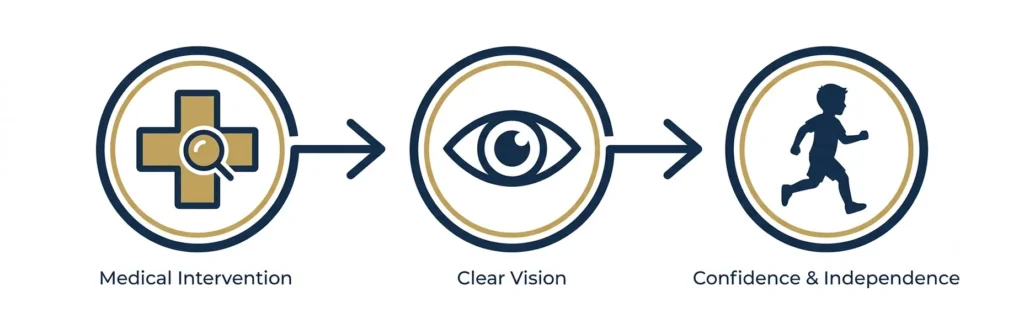
If your child needed glasses, you wouldn’t hesitate. If your child needed a hearing aid, you wouldn’t hesitate. Contact lenses are the same—they’re a medical intervention that can help your child see, learn, and thrive.
Think of Therapeutic Contact Lenses Like Any Other Medication
- If your child had asthma, you’d give them an inhaler
- If your child had diabetes, you’d give them insulin
- If your child has keratoconus, high myopia, or corneal damage, contact lenses are the treatment
This isn’t about vanity. It’s about giving your child the medical intervention they need to see clearly, learn effectively, and avoid more invasive treatments like surgery.
Does this sound like your child?
When Glasses Aren’t Enough—Signs Your Child May Need Therapeutic Contact Lenses
- Your child has been diagnosed with keratoconus (progressive corneal thinning and bulging)
- Your child has corneal scarring from trauma, infection, or surgery
- Your child has a very high prescription (thick glasses) and developmental delays, and you've noticed they struggle with distorted vision, depth perception, or navigating their environment
- Your child has a corneal condition (neurotrophic keratitis, chronic inflammation) that isn't healing
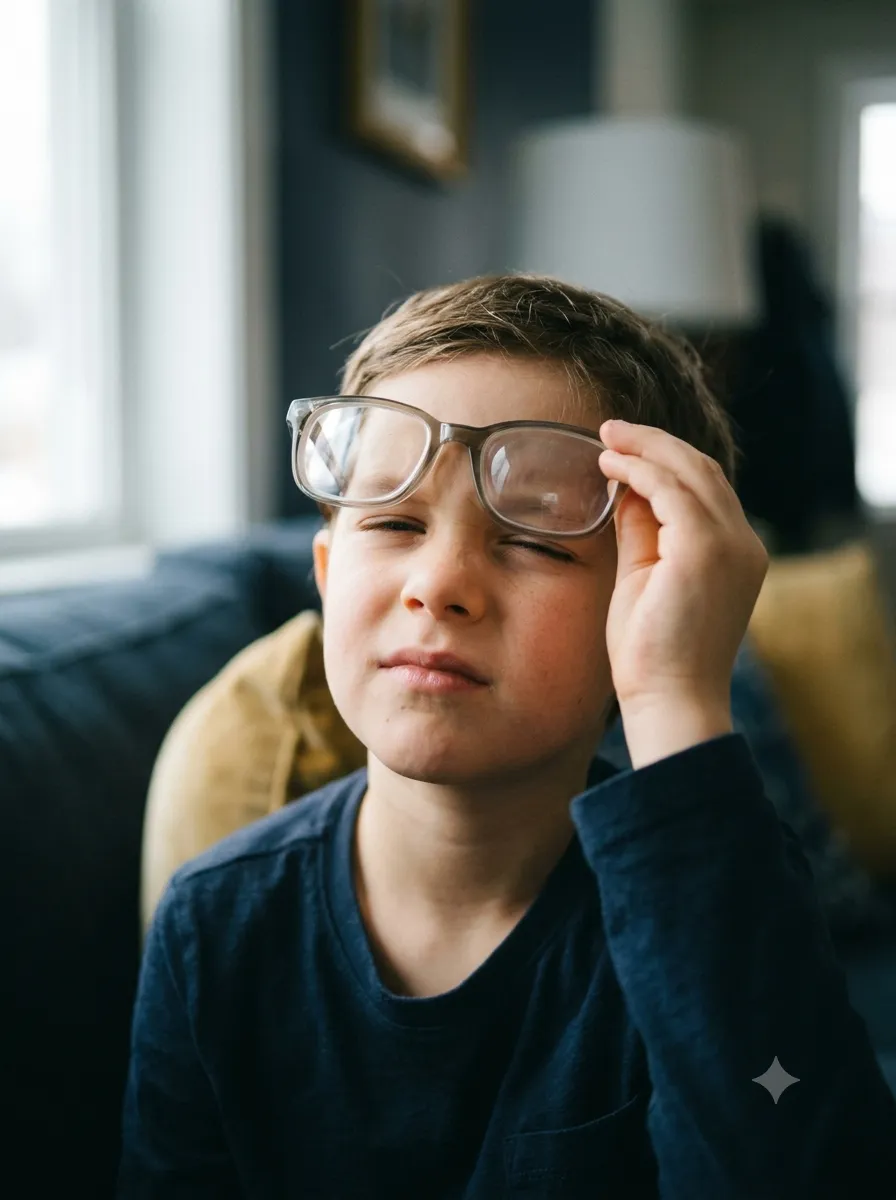
- Your child's glasses are so thick that they cause distortion, magnification, or minification—making it harder to see clearly
- Your child's myopia (nearsightedness) is getting worse every year, and you're worried about high myopia complications
- Your child has had a corneal transplant and needs vision correction
- Your child has been told they may need corneal transplant surgery for advanced keratoconus
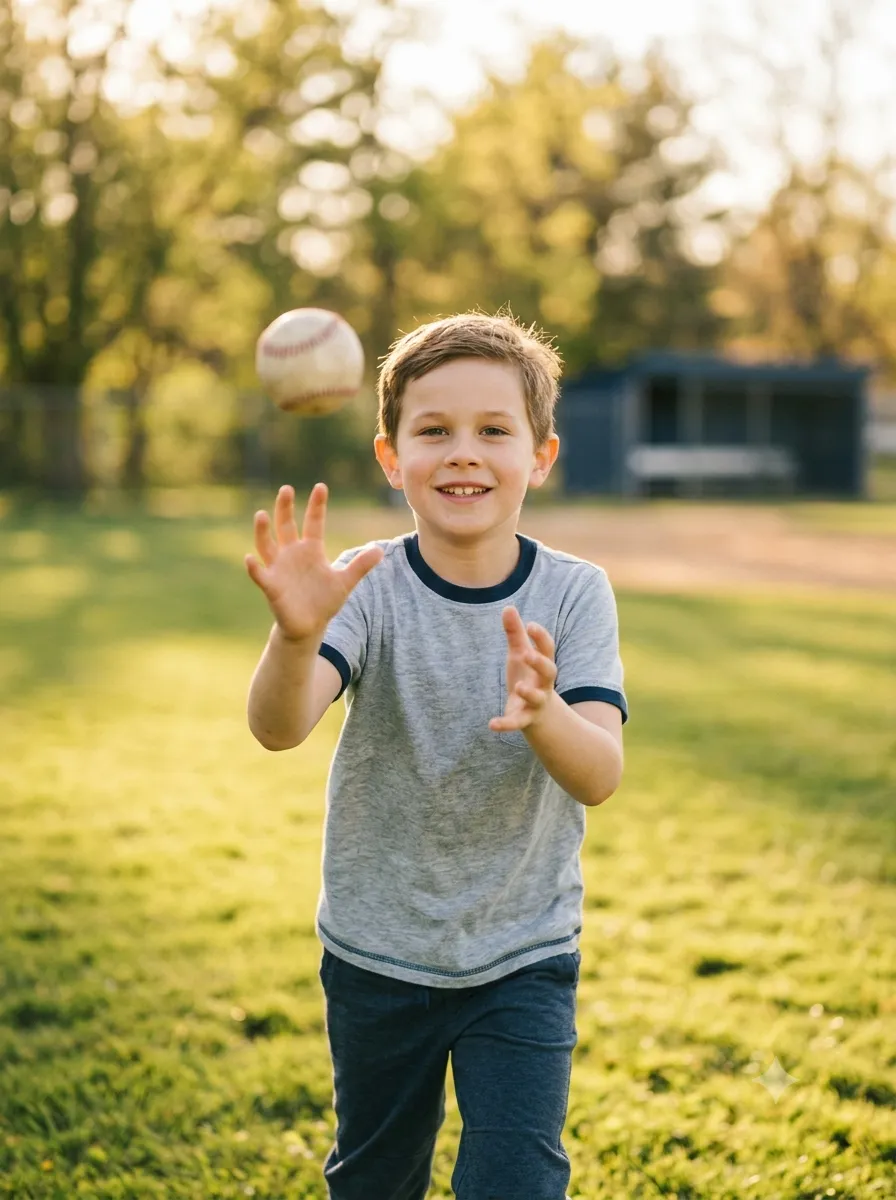
- Your child is an athlete and glasses are limiting their performance and confidence
- Your child has aphakia (no natural lens in the eye) after cataract surgery
If you checked even one box, therapeutic contact lenses may be the answer you’ve been looking for.
The Types of Therapeutic Contact Lenses for Children
Not All Contact Lenses Are the Same—Here’s How We Match the Right Lens to Your Child’s Needs
At Brain Vision Institute, we offer five types of therapeutic contact lenses for children, each designed for specific medical conditions:
1. MiSight® 1 Day Contact Lenses (Myopia Control)
What they are: The first and only FDA-approved contact lenses specifically designed to slow myopia progression in children.
Who they’re for
- Children ages 8-12 with progressive myopia (nearsightedness)
- Children whose prescription is getting stronger every year
- Children at risk of high myopia complications (retinal detachment, glaucoma, cataracts)
How they work
- Worn during the day like regular contact lenses
- Correct vision while simultaneously slowing the progression of myopia by up to 59%
- Clinical studies show children wearing MiSight lenses had less than -1.00D progression over 6 years (compared to -2.00D+ in children wearing regular glasses)
Why they matter
- Every diopter of myopia you prevent reduces your child’s lifetime risk of retinal detachment, glaucoma, and vision-threatening complications
- Children as young as 8 can independently insert and remove MiSight lenses
- Better than 20/20 vision achieved in clinical trials
“MiSight lenses are like braces for your child’s eyes. Just as braces guide teeth into the right position, MiSight lenses guide your child’s eye growth to slow myopia progression. The earlier you start, the more myopia you can prevent—and the healthier your child’s eyes will be for life.”
2. Orthokeratology (Ortho-K) Lenses (Myopia Control + Vision Correction)
What they are: Rigid gas-permeable (RGP) lenses worn overnight that gently reshape the cornea while your child sleeps. When they wake up and remove the lenses, they can see clearly all day without glasses or daytime contacts.
Who they’re for
- Children with progressive myopia who want freedom from daytime glasses/contacts
- Athletes who need clear vision during sports without glasses or contacts
- Children who struggle with daytime contact lens wear
- Children whose myopia is progressing rapidly
How they work
- Worn overnight (8 hours)
- Gently flatten the central cornea, correcting nearsightedness
- Remove in the morning → clear vision all day
- Slow myopia progression by 30-50% (even more effective when combined with low-dose atropine)
Why they matter
- Freedom during the day → No glasses, no daytime contacts
- Excellent for athletes → Swim, play sports, run without worrying about glasses or contacts
- Reversible → If your child stops wearing ortho-K lenses, their cornea returns to its original shape
- FDA-approved and safe for children
“Ortho-K lenses are like retainers for your child’s eyes. Just as retainers keep teeth straight after braces, ortho-K lenses reshape the cornea overnight so your child wakes up with clear vision—no glasses, no daytime contacts. For active kids and athletes, it’s life-changing.”
3. Scleral Contact Lenses (Advanced Keratoconus, Corneal Scarring, Post-Transplant)
What they are: Large-diameter, rigid gas-permeable lenses that vault over the entire cornea and rest on the white part of the eye (the sclera). They create a fluid reservoir between the lens and the cornea, providing both vision correction and corneal protection.
Who they’re for
- Children with advanced keratoconus (steep, irregular corneas that glasses can’t correct)
- Children with corneal scarring from trauma, infection, or surgery
- Children who have had a corneal transplant and need vision correction
- Children with neurotrophic keratitis or chronic corneal inflammation (the lens acts as a protective bandage)
- Children with aphakia (no natural lens) after cataract surgery
How they work
- Vault over the irregular cornea without touching it
- Create a smooth optical surface for clear vision
- Provide all-day moisture and protection for damaged or sensitive corneas
- Correct vision that glasses and regular contact lenses cannot
Why they matter
- Can prevent corneal transplant surgery → In a recent study, scleral lenses prevented 9 children from needing corneal transplants
- Restore vision when nothing else works → For children with advanced keratoconus or corneal scarring, scleral lenses may be the only option
- Safe for very young children → Successfully fitted in children as young as 16 months old
- 83% success rate → In a study of 18 pediatric patients, 83% continued wearing scleral lenses long-term because of the life-changing benefits
“Imagine your child’s cornea is like a bumpy road. Glasses can’t smooth out the bumps, so vision stays blurry. Scleral lenses vault over the bumpy road and create a smooth surface—like paving a new road. Suddenly, your child can see clearly. For children with advanced keratoconus or corneal damage, scleral lenses can save them from needing corneal transplant surgery.”
4. Rigid Gas-Permeable (RGP) Lenses (High Prescriptions, Astigmatism, Developmental Delays)
What they are: Small, durable lenses made of oxygen-permeable plastic that provide crisp, clear vision with minimal distortion.
Who they’re for
- Children with high prescriptions (thick glasses) who experience distortion, magnification, or minification
- Children with developmental delays who need undistorted vision to navigate their environment
- Children with high astigmatism that glasses don’t fully correct
- Children who need long-lasting, durable lenses (RGP lenses can last 1-2 years)
How they work
- Sit on the cornea and move with the eye
- Provide a smooth optical surface that corrects vision without distortion
- Allow oxygen to pass through to the cornea (healthy for long-term wear)
Why they matter
- Eliminate distortion from thick glasses → For children with high prescriptions, thick glasses cause “fishbowl vision”—magnifying or minifying images and distorting peripheral vision. RGP lenses provide natural, undistorted vision.
- Critical for children with developmental delays → Children who are already working hard to process visual information need clear, undistorted vision. Thick glasses make it harder. RGP lenses make it easier.
- Excellent vision quality → RGP lenses provide sharper vision than soft contact lenses
- Durable and cost-effective → Last 1-2 years with proper care
“Imagine trying to learn to walk while looking through a fishbowl. That’s what thick glasses can feel like for children with high prescriptions. The edges are distorted, objects look bigger or smaller than they really are, and depth perception is off. RGP contact lenses remove the fishbowl and give your child a clear, natural view of the world. For children with developmental delays, this can make a huge difference in how they navigate and interact with their environment.”
5. Soft Therapeutic Contact Lenses (Bandage Lenses for Healing)
What they are: Soft, flexible lenses that act as a protective bandage for damaged or healing corneas.
Who they’re for
- Children with corneal abrasions or injuries
- Children with recurrent corneal erosions (cornea doesn’t heal properly)
- Children with neurotrophic keratitis (reduced corneal sensitivity)
- Children recovering from corneal surgery
How they work
- Cover and protect the cornea while it heals
- Keep the cornea moist and comfortable
- Reduce pain and light sensitivity
- Allow healing without irritation from blinking
Why they matter
- Accelerate healing → Protect the cornea from further damage
- Reduce pain → Provide comfort during the healing process
- Prevent complications → Keep the cornea moist and protected
“Bandage contact lenses are like a Band-Aid for your child’s cornea. They cover and protect the damaged area while it heals, keeping it moist and comfortable. For children with corneal injuries or chronic corneal conditions, bandage lenses can make the difference between prolonged pain and quick healing.”
Why Contact Lenses Are Better Than Glasses for Some Children
When Glasses Aren’t Enough—The Medical Reasons Contact Lenses Are Superior
Contact lenses aren’t just an alternative to glasses—for some children, they’re medically superior.
1. Contact Lenses Eliminate Distortion (Critical for High Prescriptions + Developmental Delays)
The problem with thick glasses
How contact lenses solve this
- Your child has been diagnosed with keratoconus (progressive corneal thinning and bulging)
- Your child has corneal scarring from trauma, infection, or surgery
- Your child has a very high prescription (thick glasses) and developmental delays, and you've noticed they struggle with distorted vision, depth perception, or navigating their environment
- Your child has a corneal condition (neurotrophic keratitis, chronic inflammation) that isn't healing
- Your child's glasses are so thick that they cause distortion, magnification, or minification—making it harder to see clearly
- Your child's myopia (nearsightedness) is getting worse every year, and you're worried about high myopia complications
- Your child has had a corneal transplant and needs vision correction
- Your child has been told they may need corneal transplant surgery for advanced keratoconus
- Your child is an athlete and glasses are limiting their performance and confidence
- Your child has aphakia (no natural lens in the eye) after cataract surgery
“Children with developmental delays are already working hard to process visual information. Thick glasses add another layer of difficulty—distorting what they see and making it harder to navigate their world. Contact lenses remove that barrier and give them clear, undistorted vision. For these children, contact lenses aren’t cosmetic—they’re a medical intervention that supports their development.”
2. Contact Lenses Correct Vision That Glasses Cannot
Conditions where glasses fail
How contact lenses solve this
- Keratoconus → Cornea is too irregular for glasses to correct
- Corneal scarring → Uneven surface prevents clear vision with glasses
- Post-corneal transplant → High astigmatism that glasses can't fully correct
- High myopia → Thick glasses cause distortion and discomfort
- Create a smooth optical surface → Vault over or conform to the irregular cornea
- Restore clear vision → Often 20/20 or better when glasses only provide 20/200
3. Contact Lenses Slow Myopia Progression (Glasses Do Not)
The problem with glasses for progressive myopia
How contact lenses solve this
- Glasses correct vision but do nothing to slow myopia progression
- Your child's prescription gets stronger every year
- High myopia increases lifetime risk of retinal detachment, glaucoma, and cataracts
- MiSight lenses slow myopia progression by up to 59%
- Ortho-K lenses slow myopia progression by 30-50%
- Every diopter you prevent reduces your child's lifetime risk of vision-threatening complications
4. Contact Lenses Provide Freedom for Active Children
The problem with glasses for athletes
How contact lenses solve this
- Fog up during sports
- Get splattered by mud or rain
- Fall off during physical activity
- Limit peripheral vision
- Risk of breaking and causing injury
- Move with the eye → No slipping, no fogging
- Full peripheral vision → See the ball, the field, and opponents clearly
- Safe for sports → No risk of broken glasses causing injury
- Confidence → Many children feel more confident and perform better without glasses
“But Isn’t My Child Too Young for Contact Lenses?”
“The Truth About Contact Lenses and Age—It’s Not About Age, It’s About Maturity and Medical Need”
You might be thinking: “My child is only 8 years old. Aren’t they too young for contact lenses?”
Here’s what the research shows:
✅ Children as young as 8 can independently insert and remove contact lenses (MiSight clinical trials)
✅ Scleral lenses have been successfully fitted in children as young as 16 months old (NIH study)
✅ 83% of pediatric patients continued wearing scleral lenses long-term because of the life-changing benefits
✅ Ortho-K lenses are FDA-approved for children and have been used safely for decades
It’s Not About Age—It’s About:
- Medical necessity → Does your child have a condition that requires contact lenses?
- Maturity and responsibility → Can your child (with your help) learn to insert, remove, and care for lenses?
- Motivation → Does your child want to wear contact lenses? (Children who are motivated are more successful)
“But What If My Child Can’t Handle Contact Lenses?”
Here’s how we set your child up for success:
- Comprehensive training → We teach both you and your child how to insert, remove, and care for lenses
- Gradual adaptation → We start with short wearing times and gradually increase as your child adapts
- Ongoing support → Regular follow-up visits to ensure proper fit, comfort, and eye health
- Parent involvement → For younger children, parents help with insertion and removal until the child is ready to do it independently
The truth? Most children adapt to contact lenses faster than adults. They’re motivated, resilient, and eager for the freedom and confidence that contact lenses provide.
Your Child’s Pathway to Therapeutic Contact Lenses
From Evaluation to Clear Vision—Here’s What to Expect
At Brain Vision Institute, we’ve developed a comprehensive, child-friendly process for fitting therapeutic contact lenses:
Comprehensive Evaluation
What we assess
- Corneal health and shape (topography, keratometry)
- Refractive error (prescription)
- Tear film quality (dry eye assessment)
- Eye health (slit lamp examination)
- Medical history (conditions, medications, prior surgeries)
- Your child’s visual needs (school, sports, hobbies)
The result
- A clear diagnosis of your child’s condition
- Determination of whether contact lenses are medically appropriate
- Recommendation for the best type of lens for your child’s needs
Custom Lens Fitting
What we do
- Select the optimal lens type (MiSight, ortho-K, scleral, RGP, or soft therapeutic)
- Custom-design the lens to your child’s unique corneal shape and prescription
- Trial fitting to ensure proper fit, comfort, and vision
- Teach insertion and removal to both you and your child
- Provide care instructions (cleaning, storage, wearing schedule)
The result
- A custom-fitted lens that provides clear vision and comfort
- Confidence in your ability to help your child succeed with contact lenses
Adaptation and Follow-Up
What happens
- Initial follow-up visits (1 day, 1 week, 1 month) to ensure proper fit and eye health
- Ongoing monitoring (every 3-6 months) to track vision, myopia progression, and corneal health
- Adjustments as needed (lens design, wearing schedule, care routine)
The result
- Long-term success with contact lenses
- Clear vision, healthy eyes, and a confident child
Your Child’s Pathway to Therapeutic Contact Lenses
From Struggling to Thriving—How Therapeutic Contact Lenses Transformed These Children’s Lives
Emma, Age 10—Scleral Lenses Saved Her from Corneal Transplant Surgery
THE STRUGGLE
“Emma was diagnosed with advanced keratoconus at age 9. Her cornea was so steep and irregular that glasses only gave her 20/200 vision. She couldn’t read the board at school, couldn’t see faces clearly, and was falling behind academically. Her doctor told us she would likely need a corneal transplant by age 12.”
THE TRANSFORMATION
“We were terrified of surgery. Then we learned about scleral lenses. Within a week of wearing them, Emma’s vision went from 20/200 to 20/25. She could read the board. She could see her friends’ faces. She was back to being herself. Scleral lenses saved her from needing a corneal transplant. She’s now 12 years old, still wearing her scleral lenses, and thriving.”
— Emma’s mom, Sarah
Liam, Age 8—MiSight Lenses Stopped His Myopia from Getting Worse
THE STRUGGLE
“Liam’s myopia was getting worse every year. At age 6, he was -2.00. By age 7, he was -3.50. I was terrified he’d end up with high myopia and all the complications that come with it—retinal detachment, glaucoma, cataracts. I felt helpless.”
THE TRANSFORMATION
“We started Liam on MiSight contact lenses at age 8. Over the next two years, his prescription only increased by -0.25D—compared to -1.50D in the previous two years. MiSight lenses slowed his myopia progression by 83%. He’s now 10 years old, wearing his lenses confidently, and we’re no longer worried about high myopia. It’s the best decision we ever made.”
Sophia, Age 12—Ortho-K Lenses Gave Her Freedom to Play Sports
THE STRUGGLE
“Sophia is a competitive swimmer and soccer player. Her glasses were always fogging up, falling off, or getting broken. She tried soft contact lenses, but they irritated her eyes during practice. She was frustrated and losing confidence.”
THE TRANSFORMATION
“We tried ortho-K lenses. Sophia wears them overnight, and when she wakes up, she has perfect vision all day—no glasses, no daytime contacts. She can swim, play soccer, and run without worrying about her vision. Ortho-K gave her freedom and confidence. She’s back to being the athlete she was meant to be.”
Why Brain Vision Institute for Therapeutic Contact Lenses?
Not All Eye Care Providers Fit Therapeutic Contact Lenses for Children—Here’s Why We’re Different
Fitting therapeutic contact lenses for children requires specialized training, advanced equipment, and a child-centered approach. At Brain Vision Institute, we have all three.
1. Specialized Expertise in Pediatric Contact Lens Fitting
- Our doctors are trained in pediatric neuro-optometry and specialty contact lens fitting
- We’ve successfully fitted therapeutic contact lenses in children as young as 16 months old
- We understand the unique challenges of fitting contact lenses in children with developmental delays, autism, ADHD, and sensory processing disorders
2. Advanced Diagnostic Technology
What we use
- Corneal topography → Maps the shape of your child’s cornea with precision
- Optical coherence tomography (OCT) → Visualizes corneal layers and detects early keratoconus
- Tear film analysis → Assesses dry eye and contact lens suitability
- Wavefront aberrometry → Measures higher-order aberrations that affect vision quality
We can detect conditions early, fit lenses with precision, and monitor your child’s corneal health and myopia progression over time.
3. Comprehensive, Child-Friendly Training
- Hands-on training for both you and your child (insertion, removal, care)
- Visual aids and videos to reinforce learning
- Practice sessions until your child is confident
- 24/7 support for questions or concerns
83% of children continue wearing therapeutic contact lenses long-term when they receive proper training and support. We set your child up for success from day one.
4. We Treat the Whole Child, Not Just the Eyes
- We consider your child’s developmental stage, sensory needs, and visual demands (school, sports, hobbies)
- We collaborate with your child’s pediatrician, occupational therapist, and other providers
- We provide vision therapy alongside contact lens wear when needed to maximize outcomes
Contact lenses are just one piece of the puzzle. We address the whole child to ensure they thrive.
Frequently Asked Questions
Your Questions About Therapeutic Contact Lenses for Children—Answered
Isn't my child too young for contact lenses?
Age is less important than medical necessity and maturity. Children as young as 8 can independently wear MiSight lenses, and scleral lenses have been successfully fitted in children as young as 16 months old. If your child has a condition that requires contact lenses (keratoconus, high myopia, corneal scarring, high prescription with developmental delays), we’ll work with you to determine if they’re ready.
Are contact lenses safe for children?
Yes. When properly fitted and monitored by a specialist, contact lenses are safe for children. In a study of 18 pediatric patients wearing scleral lenses, there were only 2 minor complications over 9+ months of wear—and no serious adverse events. MiSight and ortho-K lenses are FDA-approved for children and have been used safely for decades.
Will my child be able to insert and remove contact lenses on their own?
How much do therapeutic contact lenses cost?
The cost varies depending on the type of lens and your child’s condition. MiSight and ortho-K lenses are typically $1,500-$2,500 per year (including lenses, fitting, and follow-up care). Scleral lenses are typically $2,000-$4,000 per year. Many insurance plans cover medically necessary contact lenses (such as for keratoconus or post-transplant). We’ll work with you to maximize insurance coverage and explore payment options.
What if my child loses or damages a contact lens?
We provide replacement lenses as needed. For daily disposable lenses (like MiSight), you’ll have a supply on hand. For custom lenses (scleral, ortho-K, RGP), we keep your child’s lens parameters on file and can order replacements quickly.
Can my child play sports while wearing contact lenses?
Absolutely! Contact lenses are excellent for sports. They don’t fog up, fall off, or get splattered by mud or rain. They provide full peripheral vision and move with the eye. Many young athletes prefer contact lenses over glasses for this reason. Ortho-K lenses are especially popular with athletes because they’re worn overnight—no lenses needed during the day.
Will contact lenses cure my child's keratoconus/myopia/corneal condition?
Contact lenses do not cure these conditions, but they can restore clear vision when glasses cannot, slow myopia progression (MiSight, ortho-K), prevent corneal transplant surgery (scleral lenses for advanced keratoconus), and protect and heal damaged corneas (bandage lenses). For keratoconus, we may also recommend corneal cross-linking (a procedure that strengthens the cornea and stops progression) in addition to contact lenses.
What if my child has developmental delays? Can they still wear contact lenses?
Yes! In fact, contact lenses can be especially beneficial for children with developmental delays who have high prescriptions. Thick glasses cause distortion, magnification, and poor depth perception—making it harder for these children to navigate their environment. Contact lenses eliminate this distortion and provide clear, natural vision. We work closely with families to provide the training and support needed for success.
Are therapeutic contact lenses covered by insurance?
Many insurance plans cover medically necessary contact lenses, such as for keratoconus, corneal scarring, post-transplant, or aphakia. Myopia control lenses (MiSight, ortho-K) may or may not be covered, depending on your plan. We’ll verify your insurance benefits and help you maximize coverage.
What if my child doesn't like wearing contact lenses?
We provide a trial period to ensure your child is comfortable and successful with contact lenses. If they’re not adapting well, we’ll troubleshoot (adjust the fit, try a different lens type, provide additional training). If contact lenses ultimately aren’t a good fit, we’ll explore other options (glasses, vision therapy, surgical interventions if appropriate). Our goal is to find the best solution for your child—not to force contact lenses if they’re not working.
References
- American Optometric Association. (n.d.). Types of Contact Lenses. Retrieved from https://www.aoa.org/healthy-eyes/vision-and-vision-correction/types-of-contact-lenses
- Severinsky B, Lenhart P. Scleral contact lenses in the pediatric population-Indications and outcomes. Contact Lens & Anterior Eye. 2022 Jun;45(3):101452. doi: 10.1016/j.clae.2021.101452. PMID: 33947639.
- (n.d.). MiSight 1 day. Retrieved from https://www.misight.com/
- American Academy of Optometry. (2023). Orthokeratology. Retrieved from https://www.aao.org/eye-health/glasses-contacts/what-is-orthokeratology
- Koppen C, Kreps EO, Anthonissen L, Van Hoey M, Dhubhghaill SN, Vermeulen L. Scleral Lenses Reduce the Need for Corneal Transplants in Severe Keratoconus. Am J Ophthalmol. 2018 Jan;185:43-47. doi: 10.1016/j.ajo.2017.10.022.
- Fuller DG, Wang Y. Safety and Efficacy of Scleral Lenses for Keratoconus. Optom Vis Sci. 2020 Sep;97(9):741-748. doi: 10.1097/OPX.0000000000001578. PMID: 32932400.
- Carrasquillo KG, Riccobono K, Liao J, Shi Y, Asghari B, Brocks D, Crowley E, Peiris B. Pediatric Scleral Lenses: 21-Year Retrospective Review. Clin Optom (Auckl). 2024 Dec 24;16:327-339. doi: 10.2147/OPTO.S494398.
- Vaishnavi MS, Balakrishnan AC, Subramanian K, Agarwal S, Srinivasan B, Subramanian M. Quality of life in the pediatric population wearing scleral lenses. Indian J Ophthalmol. 2025 Dec 1;73(12):1824-1828. doi: 10.4103/IJO.IJO_239_25.
- Chamberlain P, Peixoto-de-Matos SC, Logan NS, Ngo C, Jones D, Young G. A 3-year Randomized Clinical Trial of MiSight Lenses for Myopia Control. Optom Vis Sci. 2019 Aug;96(8):556-567. doi: 10.1097/OPX.0000000000001410. PMID: 31343513.
- Cho P, Cheung SW. Retardation of Myopia in Orthokeratology (ROMIO) Study: A 2-Year Randomized Clinical Trial. Invest Ophthalmol Vis Sci. 2012 Oct 11;53(11):7077-85. doi: 10.1167/iovs.12-10565. PMID: 22969068.
Don't Wait and See. Take the First Step Today.
Your Child Deserves Clear Vision—Let’s Find Out If Therapeutic Contact Lenses Are the Answer
If your child has keratoconus, high myopia, corneal scarring, a high prescription with developmental delays, or any condition where glasses aren’t enough, therapeutic contact lenses may be the medical intervention they need. Schedule a comprehensive evaluation today. We’ll assess your child’s condition, discuss all treatment options, and create a personalized plan to restore their vision and confidence.