


Digital Vision & Binocular Vision Disorders

When Your Two Eyes Don't Work as a Team

You have two eyes, but are they working together? For millions of adults, the answer is no. A subtle misalignment or weakness in eye coordination — a Binocular Vision Disorder — can cause headaches, double vision, and profound visual fatigue. You’ve been told your eyes are “healthy,” but you know something is wrong. We specialize in diagnosing and treating the hidden eye teaming problems that other doctors miss.

Relaxed man in a bright office reading comfortably on a tablet
Woman focusing both eyes on a pen tip during a binocular vision test

It takes

1

eye muscles, multiple cranial nerves, and vast areas of the brain working in perfect sync to give you clear, single vision.

The Invisible Strain of Fighting Your Own Eyes

Woman at a laptop rubbing her temple from eye strain and headache

When your eyes aren’t synchronized, your brain has to work constantly to fuse two separate images into one clear picture. This constant, unseen effort is neurologically exhausting and is the root cause of a host of symptoms that can undermine your professional and personal life.

Does this sound familiar?

  • “I see double, especially when I’m tired or at the end of the day.”
  • “I get headaches and eye strain when I try to read or do computer work.”
  • “I feel like I have to skip lines or use my finger to keep my place when reading.”
  • “I have trouble with depth perception, judging distances, or feel clumsy.”
  • “I’ve been told I have a ‘lazy eye’ (amblyopia) or an eye turn (strabismus).”

These are not symptoms to be “pushed through.” They are classic signs of a Binocular Vision Disorder, a treatable neurological condition.

The Neurological Roots of Uncoordinated Vision

Binocular vision is a complex neurological skill. It requires 12 different eye muscles, multiple cranial nerves, and vast areas of the brain to be perfectly synchronized. When there is a breakdown in this system, it can lead to several common disorders:

Convergence Insufficiency (CI):

The most common disorder, where the eyes have difficulty turning inward to focus on a near object. This is a leading cause of eye strain, headaches, and reading difficulty. Studies have shown that children with CI are three times more likely to be diagnosed with ADHD.

Convergence Excess:

The opposite of CI — the eyes turn inward too much, causing strain and discomfort.

Accommodative Dysfunction:

The eyes’ focusing system can’t respond quickly or accurately to changes in distance, leading to blurry vision and fatigue.

Strabismus (Eye Turn):

A visible misalignment of the eyes, where one eye may turn in, out, up, or down — constant or intermittent.

Amblyopia (Lazy Eye):

The brain learns to suppress input from one eye, reducing its vision in a way that can’t be corrected with glasses alone.

Rewiring Your Brain for Effortless Teamwork

Our approach is not to use generic “eye muscle exercises,” but targeted neuro-visual therapy to retrain the brain’s ability to control the eye teaming system. The goal is to make binocular vision automatic and effortless.

Depending on your diagnosis, your personalized plan may include:

  • In-Office Neuro-Visual Therapy: Weekly sessions using advanced technology and therapeutic exercises to rebuild the neural pathways that control eye teaming.
  • At-Home Reinforcement: A structured program of daily exercises to reinforce the new skills being learned in therapy.
  • Therapeutic Lenses: In some cases, specialized prism lenses may be used to help the eyes align and reduce strain.

The Binocular Vision Assessment

1

We perform a comprehensive evaluation that measures all aspects of your binocular vision system — testing for subtle misalignments, focusing stamina, and your brain’s ability to fuse the images from both eyes into a single, 3D image.

Your Personalized Re-Synchronization Plan

2

Based on your diagnosis, we create a customized therapy program combining in-office neuro-visual therapy, at-home reinforcement, and — when needed — therapeutic prism lenses.

Achieving Automaticity

3

Our goal isn’t just to improve your symptoms, but to make clear, comfortable, single vision so automatic that you never have to think about it again — freeing up brainpower for improved reading comprehension, reduced fatigue, and enhanced overall performance.

From Double and Distracted to Single and Sharp

Your Questions, Answered

This is an outdated belief. While it is easier to treat amblyopia (lazy eye) in children, modern research has shown that due to neuroplasticity, significant improvements in vision can be made at any age with the right type of vision therapy.

No. While pencil push-ups are a single exercise for convergence, a comprehensive vision therapy program is much more. It involves a sequence of different activities and technologies designed to retrain the entire brain-eye connection, not just one muscle.

No. The goal of vision therapy is to create a permanent change in the brain. Once the new neural pathways are established and the skills become automatic, they are typically retained for life — just like learning to ride a bike.

Vision therapy is often covered by medical insurance, especially when it is prescribed to treat a diagnosed medical condition like Convergence Insufficiency. Our team will work with you to determine your specific coverage.

References

  1. CITT Study Group. (2008). Randomized clinical trial of treatments for symptomatic convergence insufficiency in children. Archives of Ophthalmology, 126(10), 1336-1349.
  2. Granet, D. B., et al. (2005). The relationship between convergence insufficiency and ADHD. Strabismus, 13(4), 163-168.
  3. National Eye Institute. (n.d.). Amblyopia. Retrieved from nei.nih.gov
  4. American Optometric Association. (n.d.). Binocular Vision.
  5. College of Optometrists in Vision Development. (n.d.). Convergence Insufficiency.
  6. Optometry & Vision Science. (Various articles on binocular vision disorders and vision therapy).
  7. Amen, D. G. (2021). The End of Mental Illness. Tyndale House Publishers.

Stop Fighting Your Eyes and Start Living Your Life

If you are struggling with headaches, eye strain, or double vision, you don’t have to live with it. A Binocular Vision Assessment can provide the answers and the path to clear, comfortable, and effortless vision.

Not Sure Where to Start?

Schedule a Consultation

Have questions? Schedule a complimentary call with our team to discuss your situation and see if our approach is the right fit for you.

Take the Symptom Survey

Take our 3-minute survey to better understand your symptoms and discover if a visual processing issue could be the cause.

Learn More at Your Own Pace Or Explore Our Free Resources

Watch Our Webinar

Watch Dr. Lorenzana's free webinar on the hidden link between vision, learning, and brain health.

Download Our Guide

Download our free informational guide, "5 Signs Your Struggles Are a Hidden Vision Problem."
``

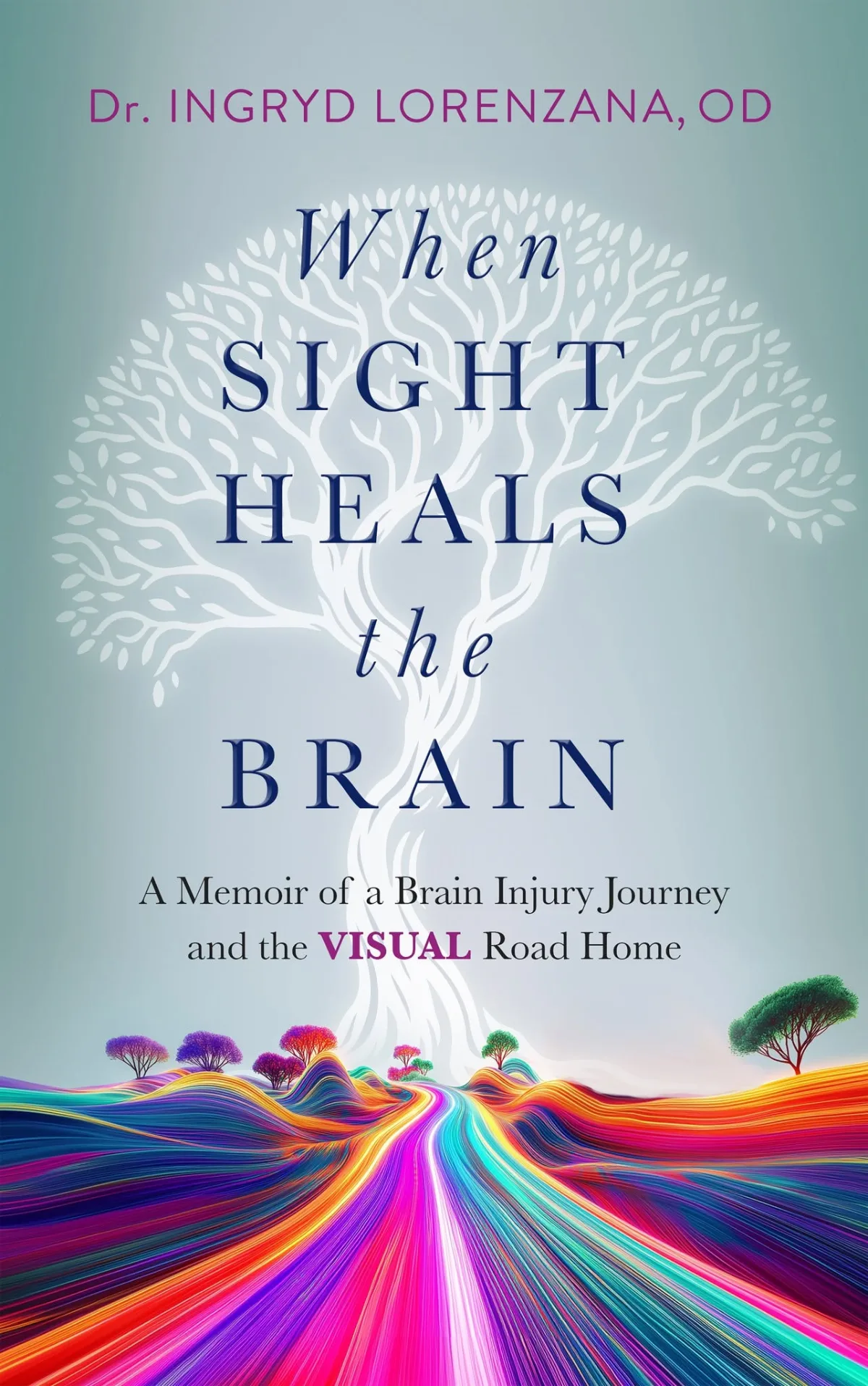
A MEMOIR OF HEALING

When Sight Heals the Brain

Dr. Ingryd Lorenzana shares her personal journey from struggle to healing, and introduces the VISUAL Road Home—a framework for recovery that changed her life and continues to transform the lives of her patients.


  • A powerful story of brain injury recovery and hope
 
  • Discover the six pillars of the VISUAL Road Home
 
  • Learn how vision and brain health are deeply connected


By

Dr. Ingryd Lorenzana, OD, FAAO, FOVDRA, CBHP

Founder, Brain Vision Institute

Cover of the book When Sight Heals the Brain by Dr. Ingryd Lorenzana

A MEMOIR OF HEALING

When Sight Heals the Brain

Cover of the book When Sight Heals the Brain by Dr. Ingryd Lorenzana

Dr. Ingryd Lorenzana shares her personal journey from struggle to healing, and a framework for recovery that changed her life and is transforming the lives of her patients.


  • A powerful story of brain injury recovery and hope
 
  • Discover the six pillars of the VISUAL Road Home
 
  • Learn how vision and brain health are deeply connected

By

Dr. Ingryd Lorenzana, OD, FAAO, FOVDRA, CBHP

Founder, Brain Vision Institute