Contact Lenses for Independence & Vitality
Supporting Your Active Life with Uncompromised Vision
Maintain your independence and active lifestyle with contact lenses designed for mature eyes. We offer multifocal lenses for clear vision at all distances and scleral lenses that provide exceptional comfort for dry eyes. Enjoy better peripheral vision for safety and balance, without the hassle of glasses.


Clear vision at
distances — near, intermediate and far — with a single multifocal lens design.
When Reading Glasses Start Running Your Life
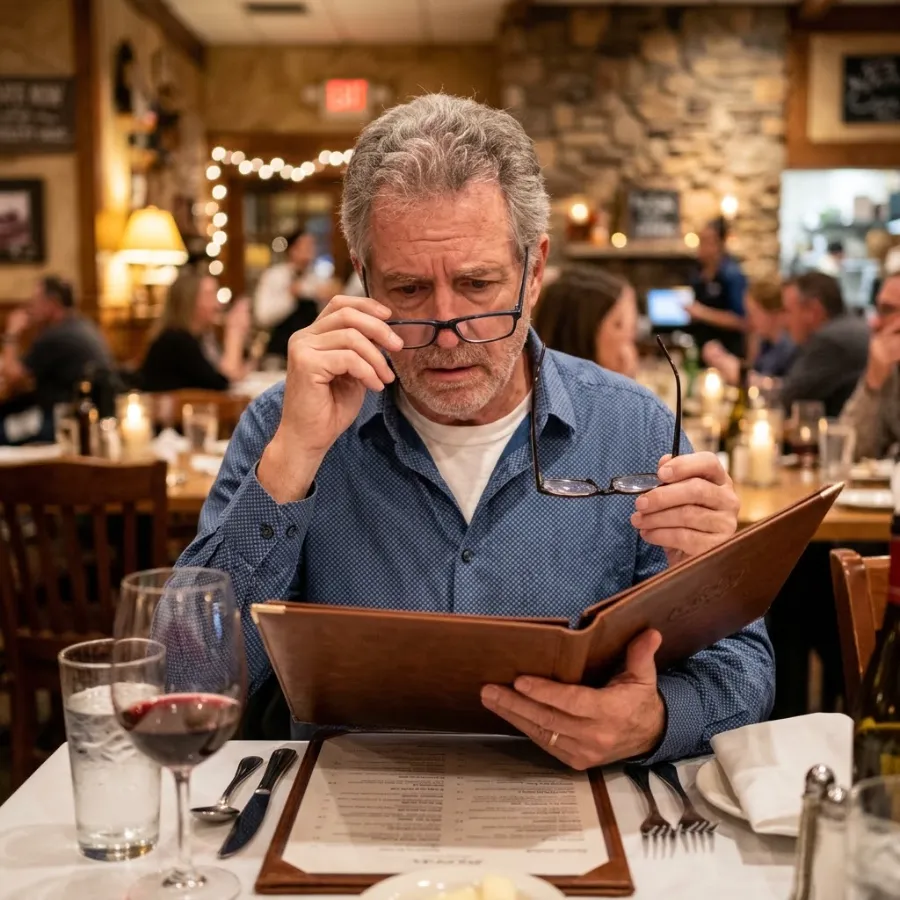
With age, the eye’s natural lens gradually loses its flexibility. This is called presbyopia, and it’s why menus, labels and phone screens get harder to read. Add dry eye, astigmatism or a past eye surgery, and many people are told contact lenses just aren’t an option anymore.
Does this sound familiar?
- Constantly switching between reading glasses and distance glasses
- Glasses that fog up, slide down or get in the way of golf, gardening or the grandkids
- Contact lenses that feel dry and scratchy by midday
- Bifocal or progressive lines that make steps and curbs harder to judge
- Being told “you’re too old for contacts” or “your eyes are too dry”
Age alone doesn’t rule out contact lenses. With the right design and a careful fit, many adults over 55 enjoy clear, comfortable vision at every distance.
Lens Designs Made for Mature Eyes
Contact lens technology has advanced significantly. We fit a range of designs matched to how your eyes, and your life, have changed.
Our lens options for adults 55+:
1. Multifocal Contact Lenses:
Soft or rigid lenses with zones for near, intermediate and distance vision, so you can read, use a computer and drive without switching glasses.
Ideal for: Presbyopia, and anyone who wants freedom from reading glasses.
2. Scleral Lenses:
Large-diameter rigid lenses that vault over the cornea and rest on the white of the eye. The space beneath is filled with saline, keeping the eye’s surface bathed and protected.
Ideal for: Moderate to severe dry eye, irregular corneas, keratoconus, and vision changes after eye surgery.
3. Monovision & Custom Soft Lenses:
One eye is corrected for distance and the other for near, or soft lenses are custom-made for high prescriptions and astigmatism.
Ideal for: People who haven’t adapted to multifocals, or who have complex prescriptions.
Why it matters for safety and balance: Contact lenses move with your eyes, so there are no frames or bifocal lines in your field of view. That gives you a wider, uninterrupted view for spotting obstacles, judging steps and staying steady on your feet.
A Careful Fitting Process for Comfort and Clarity
Mature eyes need a thorough fitting. We take the time to get it right.
Eye Health & Tear Film Assessment
1
We check the overall health of your eyes, map the shape of your cornea, and evaluate your tear film for dry eye. We also talk about your daily activities and vision goals.
Custom Lens Selection & Trial
2
We choose the right design (multifocal, scleral or custom soft), fine-tune the balance between near and far vision with trial lenses, and give you hands-on training in insertion, removal and care.
Follow-Up & Ongoing Care
3
Follow-up visits let us fine-tune your fit and vision, while we keep monitoring your eye health and dry eye over time.
Your Questions, Answered
Am I too old for contact lenses?
Age alone isn’t a barrier. Your eye health, tear film and lifestyle matter much more. Many people successfully wear contact lenses well into their 60s, 70s and beyond.
I tried multifocal contacts before and they didn't work. Can I try again?
Yes. Lens designs have improved, and a careful fit and prescription balance make a big difference. If multifocals still aren’t right for you, alternatives like monovision or scleral lenses may be.
My eyes are dry. Can I still wear contacts?
Often, yes. Scleral lenses keep the eye’s surface bathed in saline, which many people with dry eye find very comfortable. We can also treat the underlying dry eye.
Will I still need glasses?
Many people find they rarely need glasses. Some keep a pair of readers for very fine print or long reading sessions.
Is this covered by insurance?
It depends on your plan. When specialty lenses are medically necessary, for example for an irregular cornea, they are often covered by medical insurance. Our team will help verify your benefits.
Related Care at Brain Vision Institute
More for adults 55+
Contact lenses for other ages
- Adults: Specialty Contact Lenses
- Teens: Performance Contact Lenses
- Children: Therapeutic Contact Lenses
Learn about our approach
References
- American Optometric Association. (n.d.). Multifocal Contact Lenses. Retrieved from aoa.org
- American Academy of Ophthalmology. (n.d.). Scleral Lenses. Retrieved from aao.org
- College of Optometrists in Vision Development. (n.d.). Contact Lenses for Special Needs. (Provides information on specialty lenses).
- National Eye Institute. (n.d.). Presbyopia. Retrieved from nei.nih.gov
- Peer-reviewed journals on the latest advancements in multifocal and scleral lens technology.
- Amen, D. G. (2021). The End of Mental Illness. Tyndale House Publishers. (Provides context on the importance of vision for overall well-being).
- NORA. (Neuro-Optometric Rehabilitation Association). (Provides resources on advanced vision care).
Enjoy Life Without Reaching for Your Glasses
Whether you want to read a menu, watch the golf ball land, or play with your grandchildren without glasses getting in the way, the right contact lenses can help. Schedule a consultation to find the lens design that fits your eyes and your life.