
Light-Based Healing for Adults
Harnessing the Power of Light to Heal Your Brain and Eyes
What if you could reduce inflammation, boost cellular energy, and rebalance your nervous system, all without drugs or invasive procedures? Welcome to the future of healing. Photobiomodulation (PBM) and Syntonic Light Therapy are two cutting-edge, light-based therapies that use specific wavelengths of light to stimulate the body’s natural healing mechanisms. These non-invasive treatments can provide profound relief for conditions ranging from dry eye and brain fog to anxiety and post-concussion syndrome.
been used by
optometrists
When Your System is Stuck in Overdrive
Modern life — with its constant screen time, stress, and environmental toxins — can push our bodies into a state of chronic inflammation and neurological stress. This can manifest in a wide range of symptoms that are often difficult to diagnose and treat with conventional medicine.
Do you struggle with any of the following?
- Chronic Dry Eye that doesn’t respond to drops
- Persistent brain fog, fatigue, or post-concussion symptoms
- High levels of stress, anxiety, or difficulty sleeping
- Visual fatigue and strain that lasts long after you’ve logged off
- A general feeling of being “unwell” or “out of balance”
These are signs that your body’s cellular and neurological systems are struggling. Light therapy offers a way to get to the root of the problem and support your body’s innate ability to heal.
Unlocking Your Body's Healing Potential with Light
While they both use light, PBM and Syntonics work in different but complementary ways to restore health and function.
1. Photobiomodulation (PBM): Cellular Recharging
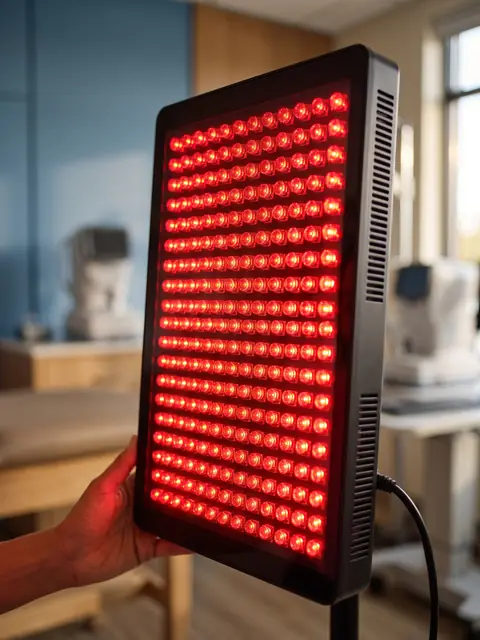
PBM, also known as low-level light therapy (LLLT), uses specific wavelengths of red and near-infrared light to stimulate the mitochondria — the “powerhouses” of your cells.
When the light is absorbed by the mitochondria, it triggers a cascade of biochemical reactions that:
- Increase ATP Production: Boosts cellular energy, giving cells the fuel they need to repair and regenerate.
- Reduce Inflammation: Decreases inflammatory markers, which is critical for conditions like dry eye and brain inflammation.
- Improve Blood Flow: Increases circulation, bringing more oxygen and nutrients to damaged tissues.
PBM is used to treat MGD (the root cause of most dry eye), reduce inflammation after a concussion, and improve overall cellular health.
2. Syntonic Light Therapy: Neurological Rebalancing
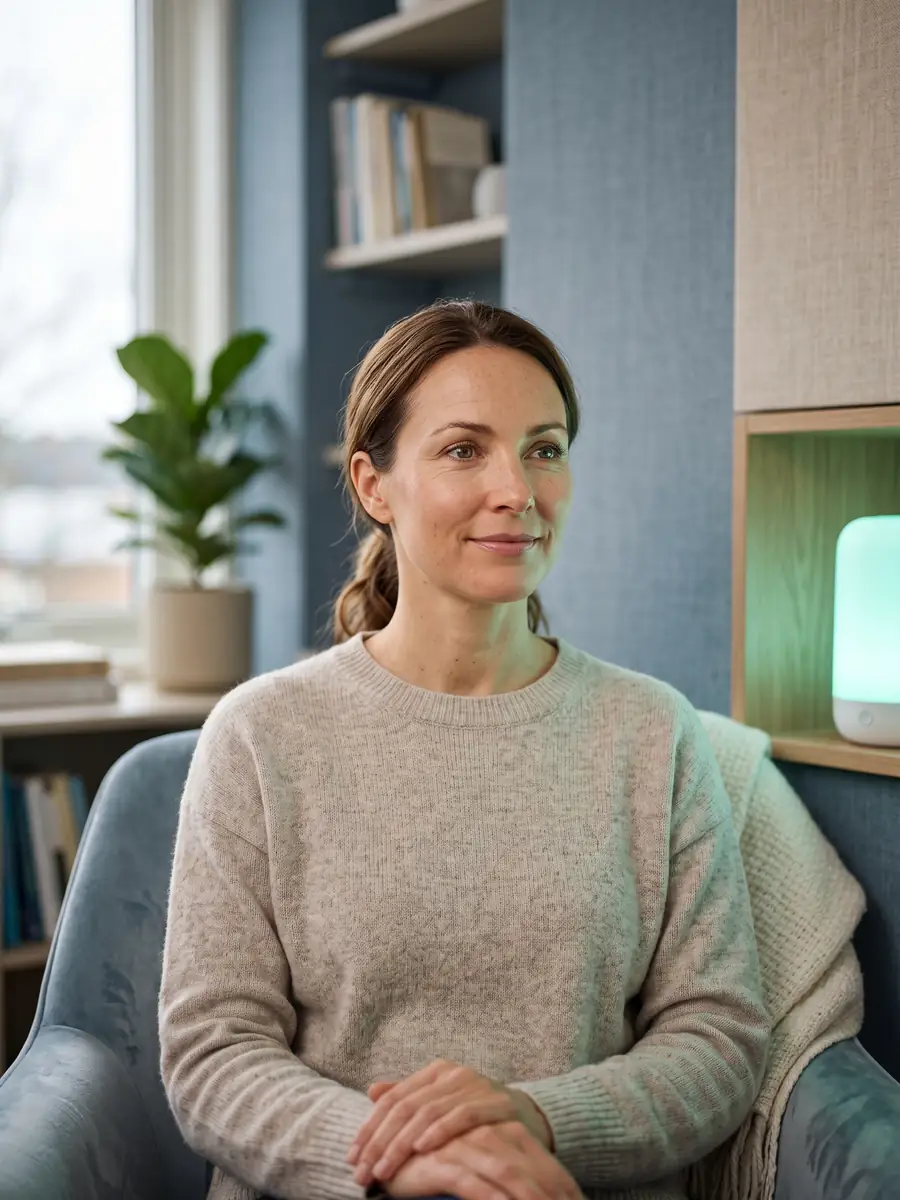
Syntonics uses specific frequencies of colored light, viewed through the eyes, to rebalance the autonomic nervous system (ANS) — the body’s “autopilot” system, controlling functions like heart rate, digestion, and our stress response (fight-or-flight vs. rest-and-digest).
The eyes have a direct connection to the brain’s key regulatory centers, including the hypothalamus and pituitary gland. By exposing the eyes to specific colors, we can influence the ANS:
- Calming Frequencies (e.g., blue/green): Can help shift a person out of a sympathetic (fight-or-flight) state and into a parasympathetic (rest-and-digest) state, reducing anxiety and improving sleep.
- Stimulating Frequencies (e.g., red/orange): Can be used to support energy and focus.
Syntonics is used to treat visual field constrictions, reduce visual stress, and help regulate the nervous system in patients with anxiety, post-concussion syndrome, and learning difficulties.
A Personalized, Non-Invasive Approach to Wellness
We use light therapy as part of a holistic approach to brain and eye health, creating a personalized plan based on your specific needs and goals.
The Comprehensive Brain-Visual Evaluation
1
We begin with a thorough assessment to understand the state of your visual and neurological systems — including a detailed health history, advanced diagnostic testing for dry eye, and an evaluation of your autonomic nervous system function.
Your Personalized Light Therapy Protocol
2
Based on your evaluation, we recommend a specific protocol — a series of in-office PBM treatments for dry eye, a course of Syntonic light therapy to rebalance your nervous system, or a combination of both.
Measurable Progress and Lasting Change
3
Throughout your treatment program, we monitor your progress with objective testing. The goal is not just to make you feel better, but to create measurable improvements in your cellular health and neurological function, leading to lasting relief and enhanced well-being.
From Stressed and Inflamed to Calm and Clear
Your Questions, Answered
Is light therapy safe?
Yes. Both PBM and Syntonics have been used for decades and have an excellent safety profile. The light used is of a low intensity and does not damage the eyes or skin. These are non-invasive, drug-free therapies with minimal to no side effects.
How long does a treatment session take?
A typical PBM session for dry eye takes about 15-20 minutes. A Syntonics session is also about 20 minutes. They are quick, comfortable, and can be done in our office.
How many sessions will I need?
This depends on the individual and the condition being treated. A typical protocol may involve a series of 4-6 PBM sessions or 10-20 Syntonics sessions over the course of several weeks.
Is this new-age or is it backed by science?
While it may seem futuristic, the science behind light therapy is well-established. There are thousands of peer-reviewed studies on the cellular mechanisms of Photobiomodulation, and Syntonics has been used by optometrists for over 80 years.
Related Care at Brain Vision Institute
More for adults
Light therapy for other ages
Learn about our approach
References
- Hamblin, M. R. (2017). Mechanisms and applications of the anti-inflammatory effects of photobiomodulation. AIMS Biophysics, 4(3), 337.
- College of Syntonic Optometry. (n.d.). What is Syntonics?. Retrieved from collegeofsyntonicoptometry.org
- Gottlieb, R., & Wallace, L. (2010). The Power of Light: The Epic Story of Man’s Quest to Harness the Sun. Rowman & Littlefield Publishers.
- American Optometric Association. (n.d.). Light Therapy in Optometry.
- National Institutes of Health. (n.d.). Photobiomodulation.
- Optometry & Vision Science. (Various articles on Syntonic Optometry).
- Amen, D. G. (2021). The End of Mental Illness. Tyndale House Publishers.
Go Beyond Managing Symptoms. Heal at the Cellular Level.
If you are struggling with chronic inflammation, neurological stress, or visual fatigue, it’s time to explore the power of light. These advanced, non-invasive therapies can provide the breakthrough you’ve been searching for.