Post-Concussion & Fall Recovery for Adults 55+
Why That Fall 6 Months Ago Could Be Causing Your Double Vision Now
Your balance problems, double vision, and memory issues might not be “just aging.” What if they’re the result of a fall that happened months ago — a fall you were told was “no big deal”?
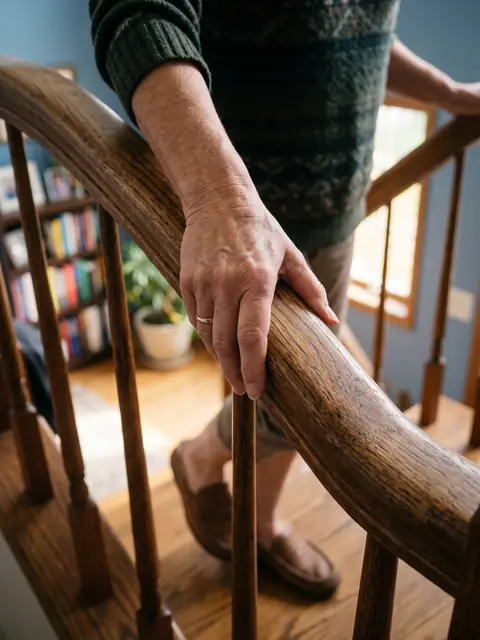
Falls Increase Dementia Risk by
— but only if the underlying brain injury goes untreated. Your symptoms are real, and they’re treatable.
You Were Told “No Broken Bones, You’re Fine.” But What If You Weren’t?
The Delayed Symptom Gap: A Common Story for Adults 55+
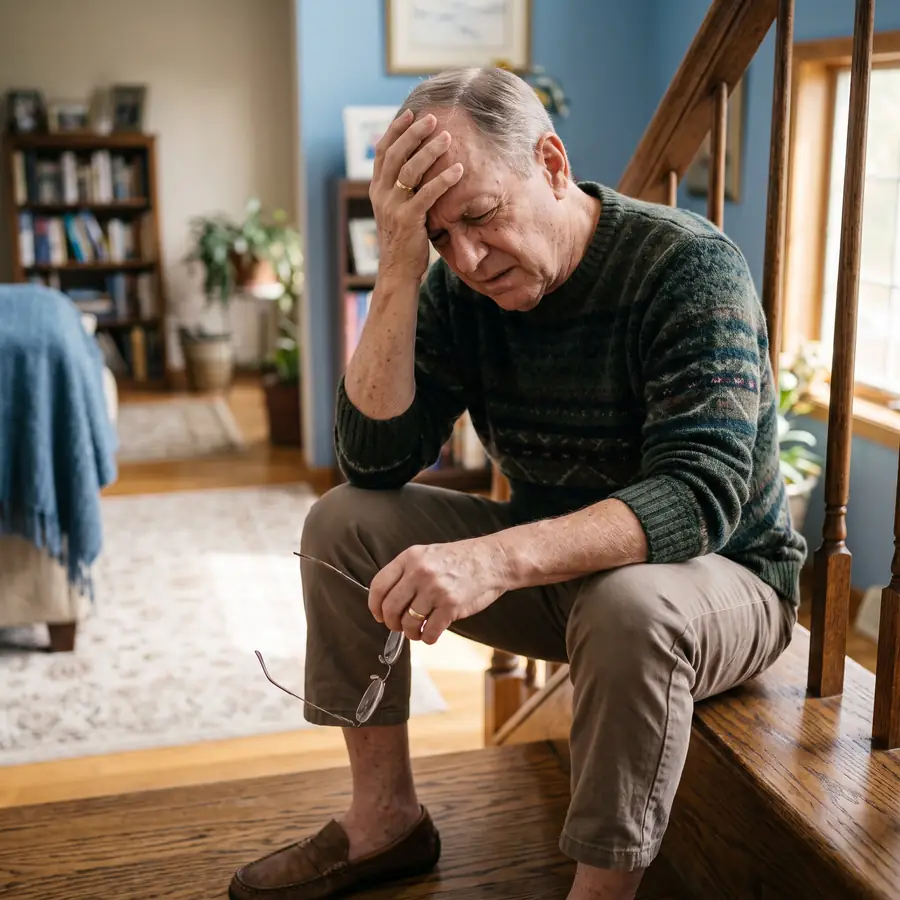
You know something isn’t right. The double vision, the unsteadiness, the trouble concentrating — these aren’t things you had before. But when you mention them to your doctor, you’re told it’s “just part of getting older” or “you need new glasses.” What if it’s not aging at all? What if it’s the result of a fall you’ve almost forgotten about?
- You fall. Falls are the #1 cause of ER visits for adults over 65.
- You go to the ER (or you don’t). If you do seek care, you’re often sent home with “no broken bones, you’re fine.”
- You seem fine. For weeks or months, there are no obvious problems. You think you dodged a bullet.
- Symptoms emerge later. Double vision appears. Balance gets worse. Memory starts slipping. You’re more anxious about falling again.
- No one connects the dots. The fall is a distant memory. Your doctor dismisses your symptoms as “normal aging.” You’re told to “just be more careful.”
- The decline accelerates. Untreated TBI compounds natural aging, increasing your risk of another fall, cognitive decline, and even dementia.
This is how a “minor fall” becomes a threat to your independence. Research from the National Institutes of Health (NIH) shows that older adults are uniquely vulnerable to delayed symptoms after a fall — 14% of “mild” head injuries in older adults show brain lesions on CT scans. Your symptoms are real. They are not “just aging.” They are the result of a treatable brain injury.
Brain Shrinkage (Atrophy):
As we age, our brains naturally shrink, creating more space in the skull. When you fall, your brain has more room to move, causing more damage — even from a “minor” fall.
Cognitive Reserve Depletion:
You have less “cognitive reserve” to compensate for brain injury. As natural aging continues, the injury compounds the decline.
Blood Thinners:
If you take anticoagulants (aspirin, warfarin, etc.), you’re at higher risk for delayed bleeding in the brain after a fall. Symptoms can appear days or weeks later.
Masking by Other Conditions:
Existing health issues (diabetes, high blood pressure, arthritis) mask TBI symptoms. Double vision is dismissed as “you need new glasses.”
At the Brain Vision Institute, we understand the unique challenges older adults face after a fall. We have the specialized tools to identify and treat the root cause of your symptoms — even when everyone else has told you “it’s just aging.”
You Were Told It Was "Just a Minor Fall." So Why Do You Still Feel So Unsteady?
Even a seemingly minor fall can cause a concussion. You might be noticing:
- Double Vision (Diplopia): Objects appear blurry or doubled, making reading and driving difficult.
- Dizziness & Balance Issues: You feel unsteady on your feet and are afraid of falling again.
- Visual Discomfort: Bright lights are overwhelming, and busy environments like grocery stores are exhausting.
- Cognitive Slowdown: You have trouble concentrating, and your memory isn’t as sharp as it used to be.
- Loss of Confidence: You’re avoiding activities you once enjoyed for fear of another fall.
You are not just “getting older.” These are the real, treatable effects of a brain injury.
Protecting Your Brain for the Years to Come
As we age, our brains have less cognitive reserve, making recovery from a concussion slower and more challenging. An untreated concussion can also increase the risk of long-term neurodegenerative conditions.
Key Differences in Adults 55+:
- Slower Recovery: It often takes longer for the brain to heal and create new neural pathways.
- Increased Fall Risk: Dizziness and balance issues from a concussion create a dangerous cycle of fall-injury-fall.
- Impact on Independence: The fear of falling can lead to a more sedentary lifestyle, which has its own health risks.
- Dementia Risk: Falls are associated with a 21% increased risk of future dementia diagnosis.
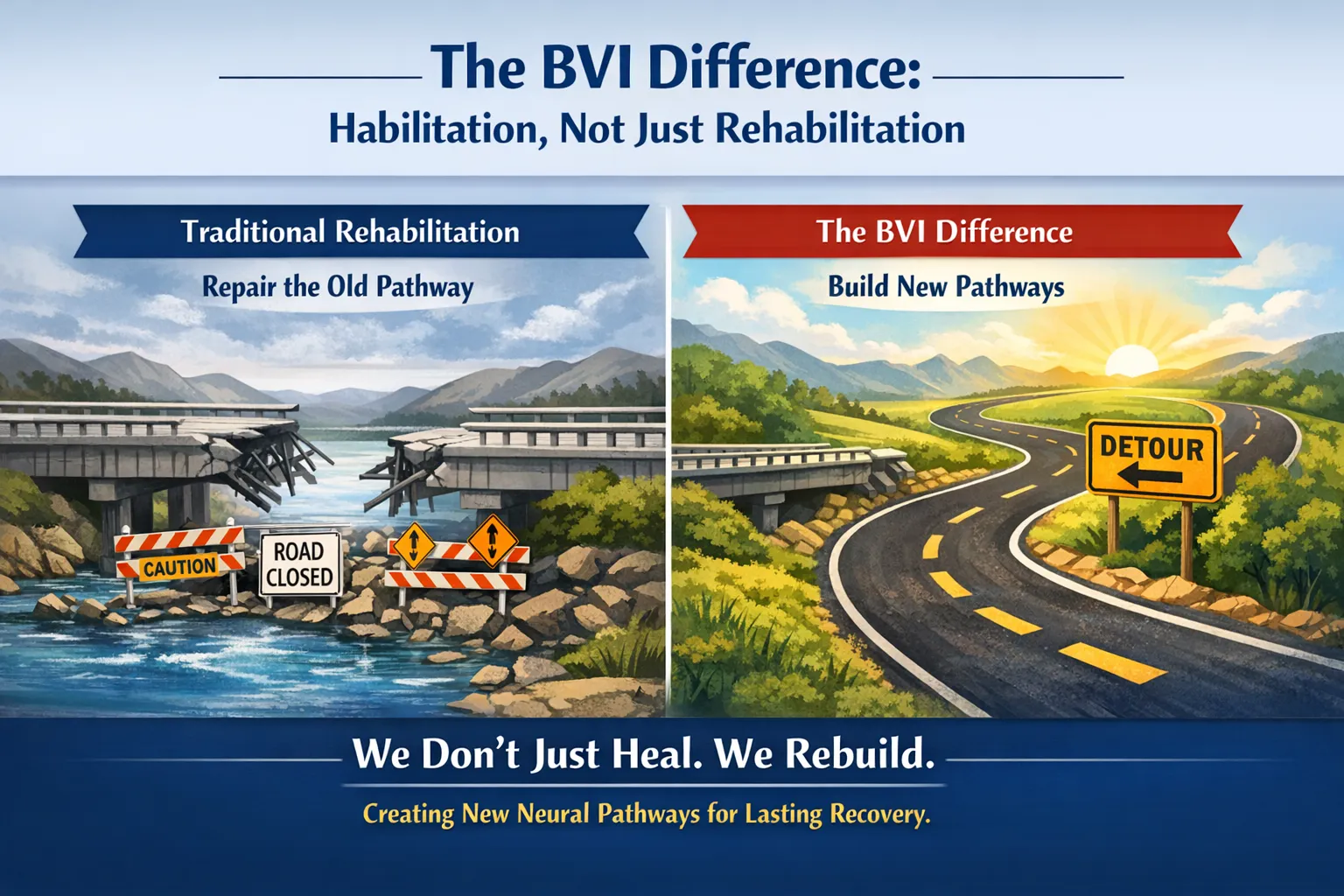
The BVI Difference: Habilitation, Not Just Rehabilitation
We Don’t Just Heal. We Rebuild.
Most concussion care focuses on rehabilitation—trying to restore what was lost. But neural pathways damaged by trauma often cannot be repaired.
At BVI, we focus on habilitation. We use the visual system—the brain’s primary information pathway—to build new neural pathways that compensate for the damaged ones. It’s like creating a detour around a collapsed bridge. This is why our approach works when others have failed.
Your Path to Regaining Confidence and Protecting Your Future
A clear, supportive journey designed around your brain — and your independence.
Comprehensive Post-Concussion Evaluation
1
We go beyond a standard eye exam. Our comprehensive post-concussion evaluation uses advanced diagnostics to map the connection between your eyes and brain. For the first time, you’ll see a clear picture of why you’re struggling — and why it’s not “just aging.”
What we measure: Balance and spatial awareness, double vision (diplopia), visual processing speed, peripheral awareness, depth perception, fall risk indicators.
Personalized Habilitation Plan
2
Based on your unique assessment, we create a customized program using the 6 Pillars of CogniViiSION®. Your plan may include targeted vision therapy, photobiomodulation, nutritional support, and more — all tailored to your specific needs and focused on protecting your independence.
You’ll receive: A clear, step-by-step plan that addresses the root cause, not just symptoms.
Rebuild Your Confidence & Independence
3
Through one-on-one therapy sessions, we guide you as you build new neural pathways. We work on everything from resolving double vision to improving balance and reducing your fear of falling, helping you maintain your independence and vitality.
The result: Lasting recovery and protection against future decline.
Want to see our complete process?
Learn more about our comprehensive 5-Step Journey from consultation to lifelong support.
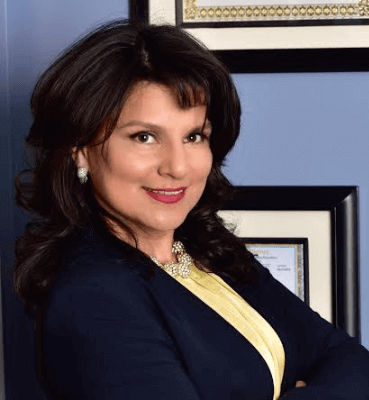
A Message from
Dr. Ingryd Lorenzana
“I know the frustration and fear that comes with a brain injury because I’ve lived it. As a child, I suffered a brain injury that had lifelong consequences. My personal healing journey is what birthed CogniViiSION® and the Brain Vision Institute. I created this practice to be the place I wish my parents had found for me—a place that offers all the components of recovery, a place that believes you, and a place that gives you hope. Your recovery is personal to me. We will walk this journey with you, every step of the way.”
Dr. Ingryd Lorenzana, Founder, Brain Vision Institute
ImPACT Certified Concussion Consultant, Certified Brain Health Provider (Amen Clinics)
Your Questions, Answered
My MRI was normal. How can I still have symptoms?
This is incredibly common. A recent JAMA study found that vision-based testing is often more sensitive than MRIs at detecting the subtle neural disruptions caused by a concussion. An MRI shows structural damage, but we measure functional disruption — how the brain is actually working.
I was told my symptoms are just part of getting older. Is that true?
While some changes are normal with age, the persistent symptoms after a fall or injury are not. They are signs of a treatable brain injury, not an inevitable decline. Research shows that 14% of “mild” head injuries in older adults show brain lesions on CT scans — these are real injuries, not “just aging.”
How can this help prevent future falls?
By improving your visual processing, balance, and spatial awareness, we can significantly reduce your risk of future falls and help you feel more confident in your daily activities. We address the root cause of your balance issues, not just the symptoms.
Is it too late for me to see improvement?
The brain is capable of change at any age. Our habilitation programs are designed to create new neural pathways, and we have helped many older adults regain function and improve their quality of life. It’s never too late to protect your brain health.
I take blood thinners. Does that matter?
Yes. If you take anticoagulants (aspirin, warfarin, Eliquis, etc.), you’re at higher risk for delayed bleeding in the brain after a fall. This is why comprehensive brain-visual evaluation is so critical — even if your initial ER visit showed “no problems.”
Related Care at Brain Vision Institute
More for adults 55+
- All 55+ services
- Vision, Balance & Fall Risk
- Vision & Neurological Conditions
- Vision Recovery After Stroke
Concussion recovery for other ages
Learn about our approach
References
- Centers for Disease Control and Prevention. (2023). Report to Congress on The Management of Traumatic Brain Injury.
- Thompson, H. J., McCormick, W. C., & Kagan, S. H. (2006). Traumatic brain injury in older adults: Epidemiology, outcomes, and future implications. Journal of the American Geriatrics Society, 54(10), 1590-1595.
- Ordoobadi, A. J., et al. (2024). Risk of Dementia Diagnosis After Injurious Falls in Older Adults. JAMA Network Open, 7(9), e2433461.
- Master, C. L., et al. (2021). Vision and Vestibular System Dysfunction in Pediatric Concussion. JAMA Ophthalmology, 139(7), 756-764.
Protect Your Independence. Take the First Step Today.
You deserve to live a full, active, and independent life. Don’t let the fear of falling or lingering symptoms hold you back. Schedule a consultation to discuss your specific situation and learn how we can help you protect your brain health for years to come.